


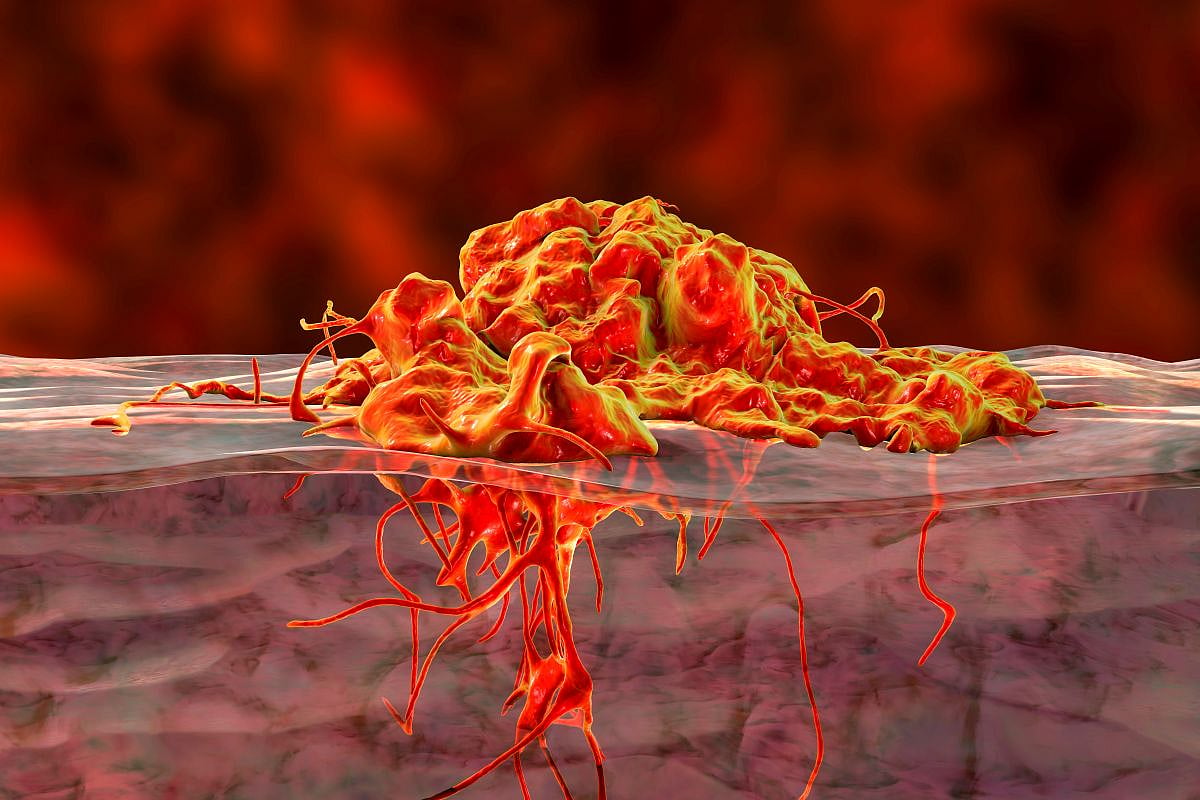
80 percent of adult patients with stage III/IV resectable melanoma remained event-free at four years from the start of neoadjuvant systemic treatment
FRIDAY, July 18, 2025 (HealthDay News) — Neoadjuvant systemic treatment (NST) followed by adjuvant treatment with nivolumab and relatlimab offers long-term benefit in adults with stage III/IV resectable melanoma, according to a study published online July 10 in the Journal of Clinical Oncology.
Elizabeth M. Burton, Ph.D., from The University of Texas MD Anderson Cancer Center in Houston, and colleagues present updated clinical follow-up data (median 47 months) for adult patients with stage III/IV, surgically resectable melanoma in a phase II clinical trial of NST (nivolumab 480 mg + relatlimab 160 mg intravenously once every four weeks for two cycles before surgery) followed by adjuvant treatment with nivolumab and relatlimab (up to 10 doses after surgery).
The researchers found that 80 percent of patients remained event-free at four years from the start of NST, including 95 percent who achieved a major pathologic response (≤10 percent viable tumor). Baseline upregulation of several immune modulatory pathways was associated with major pathologic response; there was an association seen for increased B7-H3 expression with resistance.
“If immunotherapy eliminates most of the tumor before surgery, then we have sufficiently trained the immune system for an antitumor response, which minimizes the possibility of recurrence,” Burton said in a statement. “We are encouraged by these results showing the long-term benefit of this combination and approach for our patients and the opportunity it provides to learn as much as possible about what is driving this response to treatment.”
 Implant, Patient Survival Do Not Differ for Robotic and Conventional Total Joint Replacement
 Physical Therapist-Supervised Exercise Improves Outcomes After ACL Reconstruction
 Early Complications Common in Older Kidney Transplant Recipients
 PET/MRI Offers Diagnostic, Prognostic Value in Pediatric Epilepsy
 Drug Interactions Reducing Contraceptive Effectiveness Common in Epilepsy
 Pre-Prostate Biopsy MRI Use Increased From 2017 to 2026
 Frequent Cannabis Use Linked to Epilepsy Severity
 Less Intraoperative Crystalloid Fluid Not Tied to Worse Surgical Outcomes



.jpg)
