


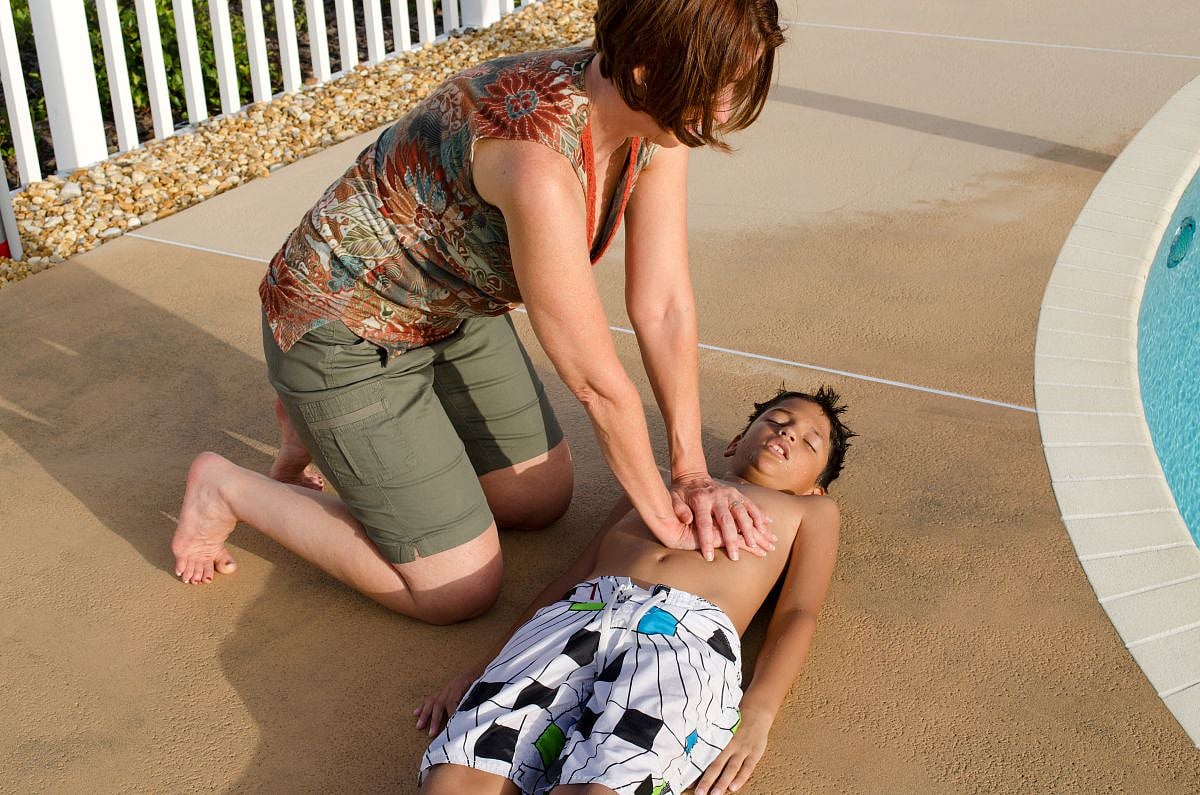
Time window to initiate successful CPR in children may be only five minutes, shorter than for adults
WEDNESDAY, Nov. 5, 2025 (HealthDay News) — There is a graded, inverse relationship between time to bystander cardiopulmonary resuscitation (CPR) and survival outcomes in children experiencing out-of-hospital cardiac arrest, according to a study to be presented at the American Heart Association Resuscitation Science Symposium 2025, being held from Nov. 8 to 9 in New Orleans.
Mohammad Abdel Jawad, from University of Missouri-Kansas City, and colleagues examined the association between time to bystander CPR initiation and survival outcomes in children. Data from the Cardiac Arrest Registry to Enhance Survival was used to identify 10,965 patients (younger than 18 years) with out-of-hospital cardiac arrest.
The researchers found that median time to bystander CPR was 3.0 minutes. Overall, 15.3 percent survived to hospital discharge, and 12.9 percent had favorable neurological survival. Compared with patients without bystander CPR, during the first five minutes of initiation, there was a graded inverse relationship between time to bystander CPR and survival to discharge (adjusted odds ratios [95 percent confidence intervals], 1.91 [1.65 to 2.20], 1.98 [1.63 to 2.40], 1.37 [1.09 to 1.72], 0.76 [0.51 to 1.13], 0.67 [0.41 to 1.08], and 0.59 [0.46 to 0.77] for zero to one, two to three, four to five, six to seven, eight to nine, and ≥10 minutes, respectively). Similar results were seen between time to bystander CPR and favorable neurological survival.
“We were not surprised that CPR initiated within five minutes of cardiac arrest improved survival odds in children,” Jawad said in a statement. “However, we were struck by how quickly the benefit dropped off after five minutes. In adults, a recent study reported survival benefits even when CPR was started at nine minutes; however, our analysis confirms that in children the time window was much shorter.”
One author disclosed ties to the pharmaceutical industry.
 Exercise Intervention Linked to Improved Attention, Memory in Breast Cancer
 .jpg) Cancer Survivors Have Lower Levels of Physical Activity
Cancer Survivors Have Lower Levels of Physical Activity  Childhood Cancer Survivors Often Have Mental Distress in Adulthood
  Blinatumomab Improves Event-Free Survival in Children With High-Risk B-Cell ALL
 .jpg) Most Specialty Oral Anticancer Meds for Blood Cancers Are Initially Rejected by Insurers
Most Specialty Oral Anticancer Meds for Blood Cancers Are Initially Rejected by Insurers  Drug Interactions Reducing Contraceptive Effectiveness Common in Epilepsy
  1 in 3 With Lupus Take Supplements, Medications With Potential for Interactions
  Holding DMARDs at Time of COVID-19 Vaccine Not Warranted in Those With Inflammatory Arthritis


