


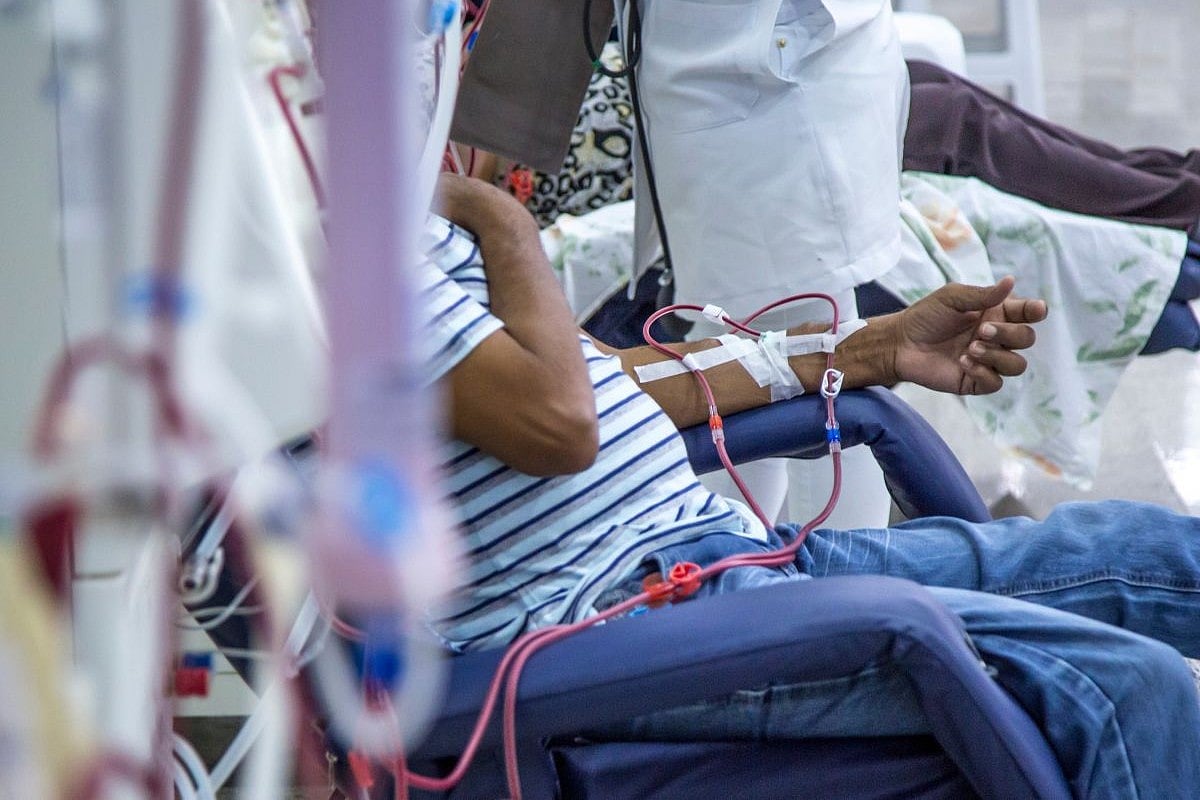
Authors call for better dialysis staff education to ultimately improve patient care
THURSDAY, Jan. 29, 2026 (HealthDay News) — There are significant gaps and variation in knowledge of transplantation processes among dialysis staff, according to a study published in the March issue of KI Reports.
Catherine E. Kelty, Ph.D., from the Indiana University School of Medicine in Indianapolis, and colleagues assessed dialysis staff knowledge of the transplant process, as well as staff and facility characteristics associated with knowledge. The analysis included 630 survey responses from dialysis centers across four U.S. regions (August 2021 to August 2022).
The researchers report that most respondents were social workers (81.1 percent) and worked at chain-owned facilities (86.2 percent). The average correct response score was 11.8 (out of 17; 69 percent). The range for correct responses on individual items was 9.4 to 95.9 percent. The odds of scoring highly were lower for non-social workers versus social workers (adjusted odds ratio [aOR], 0.39), time working in role (aORs, 0.11, 0.21, 0.38, and 0.42 for less than one year, one to three years, four to seven years, and more than 10 years, respectively; all compared with 8 to 10 years), and region (New York: aOR, 0.52, compared with the Southeast).
“Given the critical role of dialysis staff in informing patients and helping them toward transplantation, the gaps in staff knowledge may inhibit or delay access to steps before transplantation,” the authors write. “All dialysis staff must be equipped with the appropriate and current knowledge to effectively educate patients on the transplant process as well as to promote equity in access to treatment.”
.jpg) Pregnancy Complications Linked to Subsequent Risk for Cardiometabolic-Renal Conditions
Pregnancy Complications Linked to Subsequent Risk for Cardiometabolic-Renal Conditions  GLP-1 Receptor Agonists, SGLT-2is Slow Renal Function Decline in T2D With Albuminuria
 .jpeg) 1997 to 2022 Saw Increase in Pediatric Hospitalizations With AKI
1997 to 2022 Saw Increase in Pediatric Hospitalizations With AKI  Early Complications Common in Older Kidney Transplant Recipients
  Implant, Patient Survival Do Not Differ for Robotic and Conventional Total Joint Replacement
  Physical Therapist-Supervised Exercise Improves Outcomes After ACL Reconstruction
  Frailty Linked to Incident Cognitive Decline in Men With CKD
  UACR, UPCR Provide Indistinguishable Prognostic Information in CKD

.jpg)

