Even oldest individuals with most severe grade of fracture had modest absolute five-year risk for myeloma
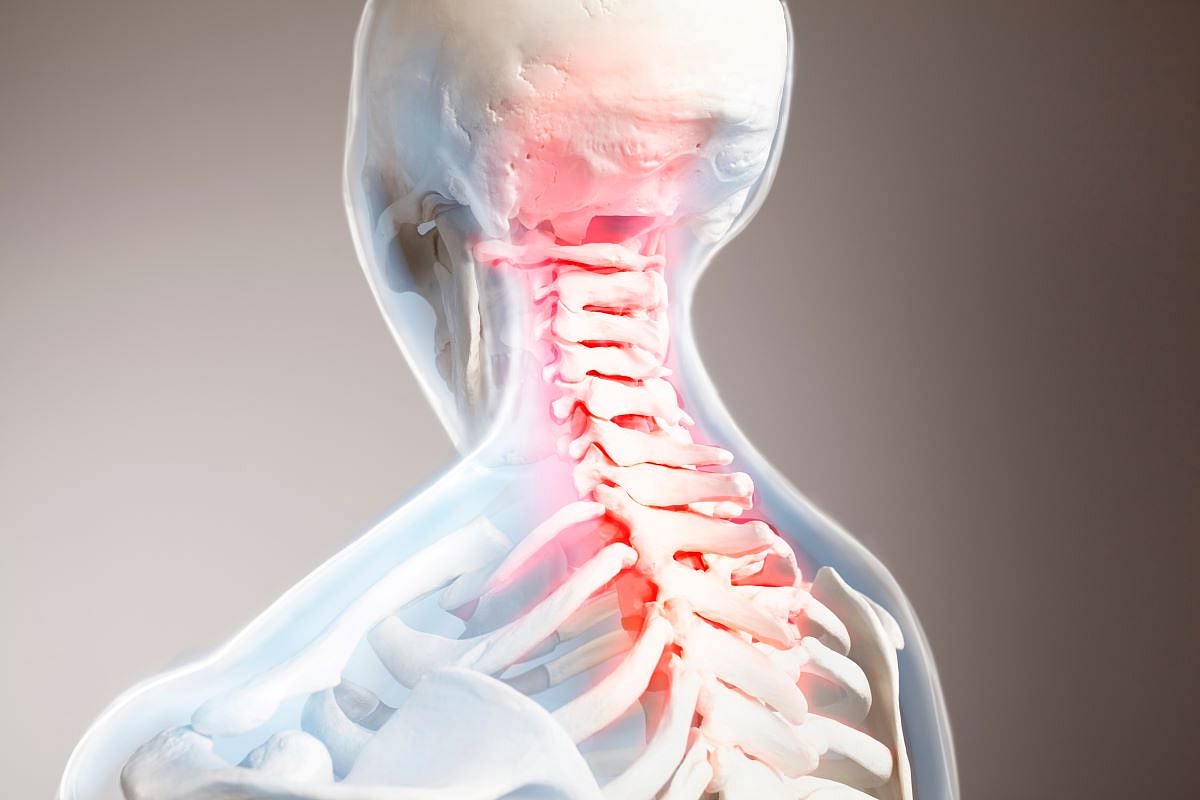
MONDAY, Sept. 28, 2026 (HealthDay News) — Adults with incidentally detected vertebral fracture have an increased relative risk for myeloma, although the absolute five-year risk is modest, according to a research letter published online Sept. 18 in Leukemia.
Rasmus Rønnemoes, M.D., from Copenhagen University Hospital — Rigshospitalet in Denmark, and colleagues examined the risk for myeloma and nonhematologic cancers in adults with incidentally detected vertebral fractures in a population of 9,059 computed tomography (CT)-scanned individuals aged 40 to 94 years from the Copenhagen General Population Study. CT scans were assessed for vertebral compression fractures.
Overall, 17.3 percent of the participants had any vertebral fracture on CT scan; 9.6 and 7.7 percent had a grade 1 fracture or a grade 2 or 3 fracture, respectively. The researchers found that individuals with any vertebral fracture had an increased relative risk for myeloma compared with those without vertebral fractures (multivariable adjusted hazard ratio, 3.73), which was more pronounced among individuals with grade 2 to 3 vertebral fractures (hazard ratio, 4.99). Absolute five-year risks for myeloma in women were 0.07, 0.17, and 0.43 percent for no vertebral fracture, grade 1 fractures, and grade 2 to 3 fractures, respectively. For men, risk estimates were more pronounced, with corresponding five-year risks of 0.10, 0.24, and 0.63 percent. Even the oldest individuals with grade 2 to 3 vertebral fractures had a modest absolute five-year risk of myeloma (five-year risks, 1.11 and 1.56 percent in 80-year-old women and men, respectively).
“It is likely of limited or no benefit to evaluate individuals with incidentally detected vertebral fractures for underlying myeloma or nonhematologic cancer, unless there are symptoms or other clinical findings raising suspicion of malignancy,” the authors write.
Several authors disclosed ties to the pharmaceutical industry.
 Multicomponent Interventions Offer Little Impact on Fall Risk
  Nearly 3 in 4 Older Adults Express Interest in Vaccine to Prevent Dementia
 .jpg) Mortality Lowest at Hemoglobin Concentrations Above WHO Thresholds
Mortality Lowest at Hemoglobin Concentrations Above WHO Thresholds  Socioeconomic Status Linked to Mortality After Acute Hip Fracture Surgery
  PET/MRI Offers Diagnostic, Prognostic Value in Pediatric Epilepsy
  Less Intraoperative Crystalloid Fluid Not Tied to Worse Surgical Outcomes
  Relapse Rare After Appendiceal Adenocarcinoma Resection
  Napping Opportunity May Improve Clinical Performance of Anesthesia Residents