


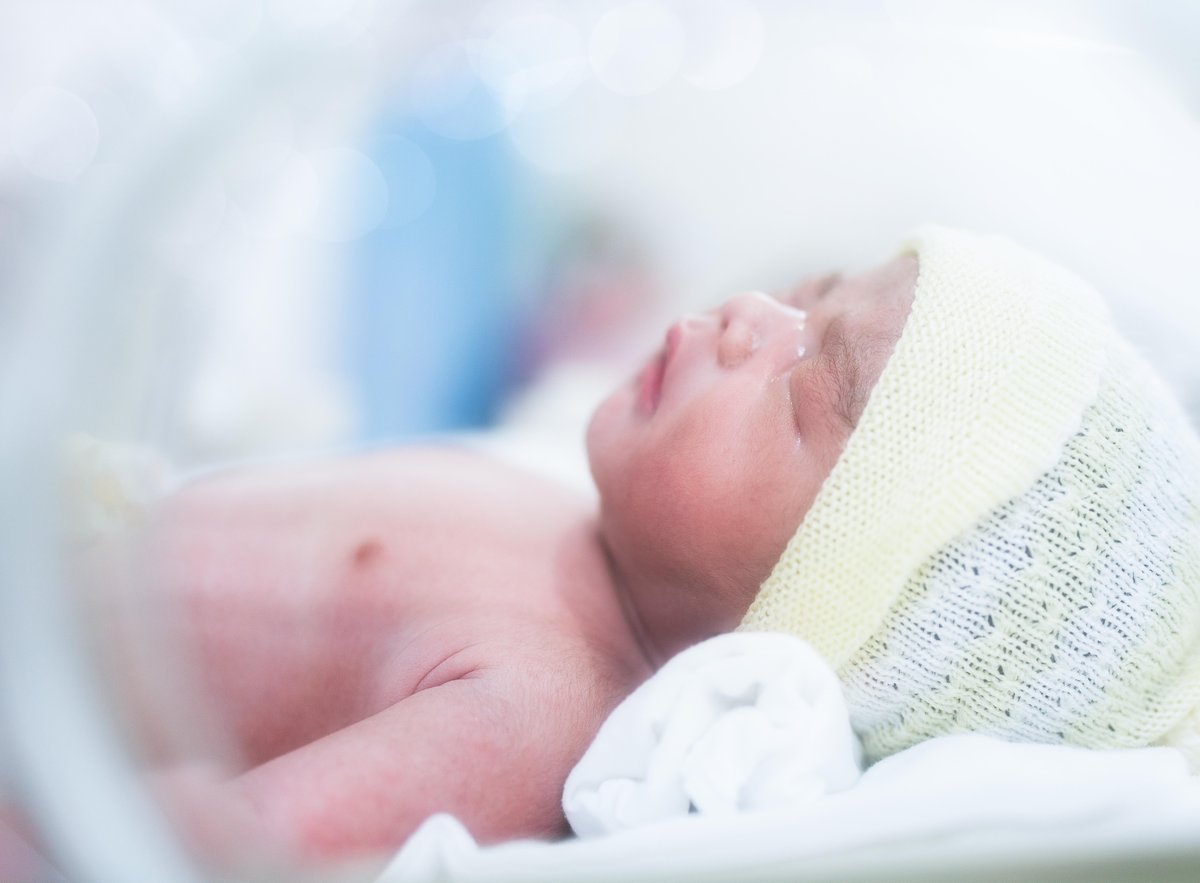
Infants born to Asian/Pacific Islander, Black, and Hispanic versus White mothers less likely to receive active treatment
THURSDAY, Sept. 1, 2022 (HealthDay News) — The frequency of active treatment among U.S. neonates born alive between 22 weeks 0 days and 25 weeks 6 days increased from 2014 to 2020, according to a study published in the Aug. 16 issue of the Journal of the American Medical Association.
Kartik K. Venkatesh, M.D., Ph.D., from The Ohio State University College of Medicine in Columbus, and colleagues examined whether the frequency of active treatment among live-born neonates in the periviable period has changed over time in a serial cross-sectional descriptive study. Data from 2014 to 2020 were included for 61,908 singleton live births without clinical anomalies between 22 weeks 0 days and 25 weeks 6 days in the United States.
The researchers found that 52 percent of the periviable neonates received active treatment. The overall frequency of active treatment (mean annual percent change per year) increased significantly from 3.9 to 4.9 percent from 2014 to 2020, and increases were also seen in all racial and ethnic subgroups (3.4 percent for Asian/Pacific Islander, 4.7 percent for Black, 4.7 percent for Hispanic, and 3.1 percent for White), and among each gestational age range (14.4 and 2.9 percent at 22 and 25 weeks, respectively). The likelihood of receiving active treatment was lower for neonates born to Asian/Pacific Islander, Black, and Hispanic versus White individuals (adjusted risk ratios, 0.82, 0.90, and 0.83, respectively).
“Our findings highlight the need for further research to understand racial and ethnic disparities in neonatal intervention at the cusp of viability,” Venkatesh said in a statement.
One author disclosed financial ties to the health care industry.
Abstract/Full Text (subscription or payment may be required)
 Pre-Prostate Biopsy MRI Use Increased From 2017 to 2026
  Maternal Vitamin D Status Linked to Preterm Delivery
  MHT Initiation May Reduce Cardiovascular Risk in Women With Vasomotor Symptoms
  Residential Context Has Larger Impact on Ovarian Cancer Survival in Black Women
  Exercise Intervention Linked to Improved Attention, Memory in Breast Cancer
 .jpg) Cancer Survivors Have Lower Levels of Physical Activity
Cancer Survivors Have Lower Levels of Physical Activity  Childhood Cancer Survivors Often Have Mental Distress in Adulthood
  Blinatumomab Improves Event-Free Survival in Children With High-Risk B-Cell ALL




