


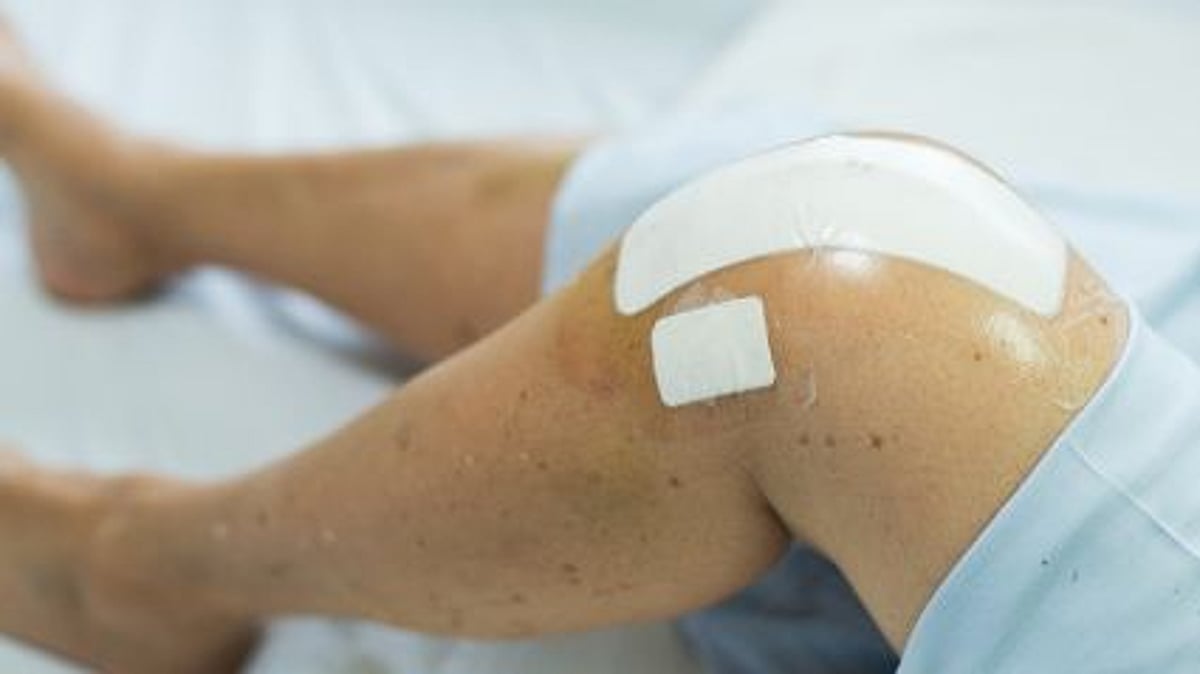
Tourniquet use makes little or no difference to function at 12 months, has little or no effect on quality of life
TUESDAY, Dec. 15, 2020 (HealthDay News) — For patients undergoing knee replacement surgery, use of a tourniquet may increase the risk for serious adverse events, according to a review published online Dec. 8 in the Cochrane Library.
Imran Ahmed, M.B., Ch.B., Ph.D., from the University of Warwick in the United Kingdom, and colleagues examined the benefits and harms of tourniquet use in knee replacement surgery in a review of 41 randomized controlled trials with 2,819 participants.
The researchers found that pain was ranked at 4.56 points after surgery without a tourniquet and at 1.25 points higher with a tourniquet at postoperative day 1 (absolute difference, 12.5 percent higher pain scores). Tourniquet use probably made little or no difference to function at 12 months, based on a minimal clinically important difference of 5.3 for the Knee Society Score and 5.0 for the Oxford Knee Score. After surgery without a tourniquet, mean function was 90.03 points and was 0.29 points worse with a tourniquet. Tourniquet use had little or no effect on success and little or no effect on quality of life. The risk for serious adverse events was probably higher with than without a tourniquet (59 versus 29 per 1,000 reported events following surgery; risk ratio, 1.73).
“The evidence indicates that knee replacement surgery performed with a tourniquet increases the risk of serious complications needing additional health care, many of which might be avoided if a tourniquet is not used,” a coauthor said in a statement.
 Implant, Patient Survival Do Not Differ for Robotic and Conventional Total Joint Replacement
  Physical Therapist-Supervised Exercise Improves Outcomes After ACL Reconstruction
  Early Complications Common in Older Kidney Transplant Recipients
  PET/MRI Offers Diagnostic, Prognostic Value in Pediatric Epilepsy
  Drug Interactions Reducing Contraceptive Effectiveness Common in Epilepsy
  Pre-Prostate Biopsy MRI Use Increased From 2017 to 2026
  Frequent Cannabis Use Linked to Epilepsy Severity
  Less Intraoperative Crystalloid Fluid Not Tied to Worse Surgical Outcomes


.jpg)
