


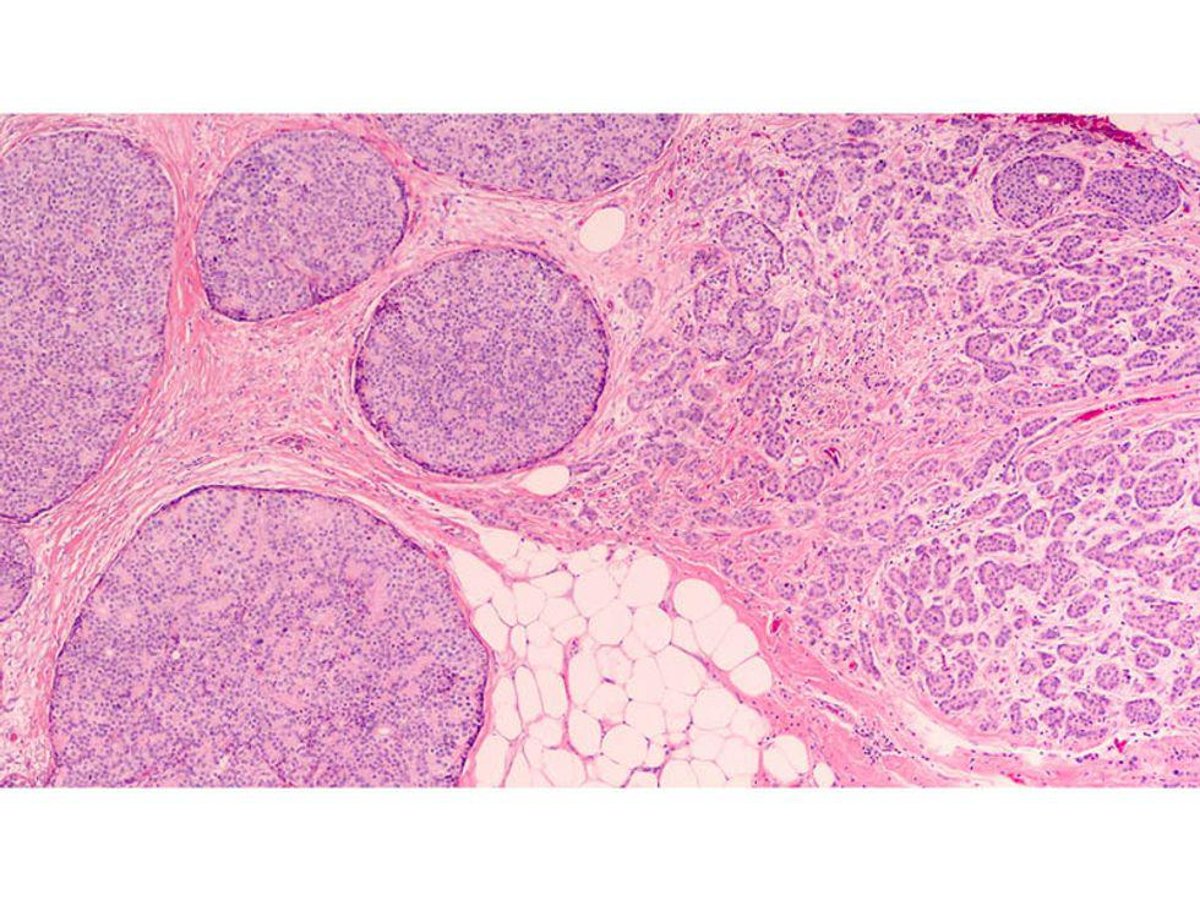
Novel deep learning model provides independent prognostic information for stratification of Nottingham histologic grade 2 tumors
MONDAY, Oct. 4, 2021 (HealthDay News) — A novel deep learning model (DeepGrade [DG]) improves prognostic stratification for Nottingham histologic grade 2 (NHG 2) breast tumors, according to a study published online Sept. 29 in the Annals of Oncology.
Yinxi Wang, from the Karolinska Institutet in Stockholm, and colleagues developed and validated a novel histological grade model based on digital whole-slide histopathology images (WSIs) and deep learning to improve risk stratification of NHG 2 breast cancer patients. Routine WSIs stained with hematoxylin and eosin from 1,567 patients were used for model optimization and validation. In an external test set with 1,262 patients, model generalizability was further evaluated. NHG 2 cases were stratified into two groups: DG2-high and DG2-low; the prognostic value of the model was examined.
The researchers found that in the internal test set, DG provided independent prognostic information for stratification of NHG 2 cases; compared with the DG2-low group, DG2-high showed an increased risk for recurrence after adjustment for established risk factors (hazard ratio, 2.94). DG2-low and DG2-high shared phenotypic similarities with NHG 1 and NHG 3, respectively. In the external test set, the prognostic value of DG was confirmed, with an increased risk for recurrence for DG2-high (hazard ratio, 1.91).
“The DeepGrade model provides independent prognostic stratification for NHG 2, and offers a potential cost-effective alternative to gene expression profiling, which could increase access to pathological information needed for clinical decision making in general, and for de-escalation of chemotherapy in particular,” the authors write.
Several authors disclosed financial ties to the biopharmaceutical industry.
 Gap Found Between Awareness of Breast Cancer Risk and Risk-Reducing Behavior
  Exercise Intervention Linked to Improved Attention, Memory in Breast Cancer
  Dense Breast Notification Linked to Increase in Use of Supplemental Ultrasound
  Mammography Trials Yield Excess-Incidence Patterns Consistent With Low Overdiagnosis
  Lower Breast, Cervical Cancer Screening Seen for Adults With Disabilities
  Alcohol-Attributable Cancer Mortality Has Increased Significantly in the U.S.
  Chemo-Free Combo of Four Targeted Therapies Shows Promise in Metastatic Breast Cancer
  AMH Predicts Benefit of Chemo + Endocrine Therapy in Under 55s With Breast Cancer
 .jpg)




