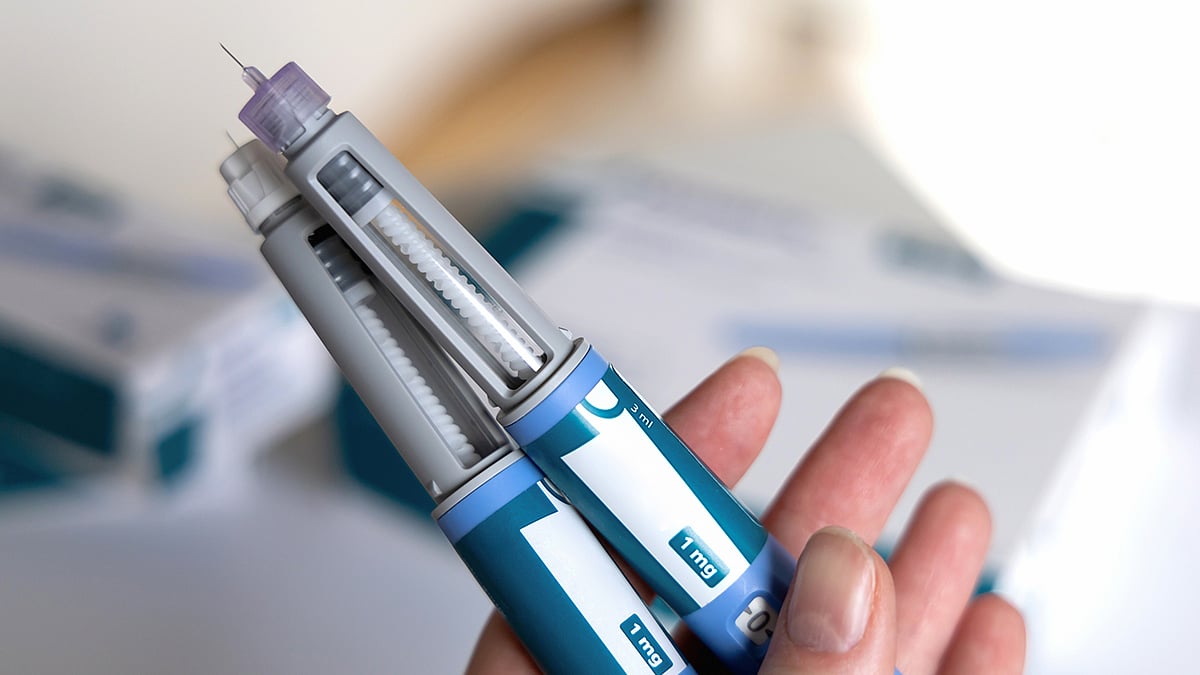
GLP-1 receptor agonist exposure linked to lower incidence, independent of age, race, ethnicity, BMI, breast density, diabetes
THURSDAY, June 4, 2026 (HealthDay News) — Glucagon-like peptide-1 receptor agonist (GLP-1 RA) exposure is associated with a lower incidence of breast cancer, according to a study published online June 2 in JCO Oncology Practice to coincide with the annual meeting of the American Society of Clinical Oncology, held from May 29 to June 2 in Chicago.
Elizabeth S. McDonald, M.D., Ph.D., from the Perelman School of Medicine at the University of Pennsylvania in Philadelphia, and colleagues examined the impact of GLP-1 RAs on breast cancer risk in a retrospective cohort study involving 111,646 women aged 45 to 80 years with a body mass index (BMI) ≥25 kg/m2 and a documented imaging outcome. One-to-one, case-control matching using propensity scores was performed based on age, race, ethnicity, highest BMI, breast density, and history of type 2 diabetes.
The researchers found that the incidence of breast cancer was lower in association with GLP-1 RA exposure (odds ratio, 0.649). GLP-1 RA exposure was associated with a lower breast cancer incidence in the matched logistic regression with 30,528 observations (600 cancer cases; odds ratio, 0.695).
“While our study was observational and does not definitively confirm an association between GLP-1 medications and reduced breast cancer incidence, it does add to the growing body of evidence suggesting that it”s worth investigating these weight-loss drugs as potential cancer prevention tools,” McDonald said in a statement.
 AMH Predicts Benefit of Chemo + Endocrine Therapy in Under 55s With Breast Cancer
  Study IDs Gaps in Hereditary Breast Cancer Risk Assessment Before Gender-Affirming Mastectomy
  Family History Drives Cancer Risk in BRCA Test Groups
  Global Findings Indicate Breast Cancer and A-Fib Incidence Frequently Overlap
  Central Adiposity Reclassifies Cardiovascular Risk Across BMI Spectrum
  High-Dose Omega-3 Linked to A-Fib Risk in Patients With High CVD Risk
  Physical Activity Reduces Stroke, Mortality, Regardless of A-Fib
  AHA: Consuming Up to 400 mg/Day of Caffeine Safe for Most Adults