


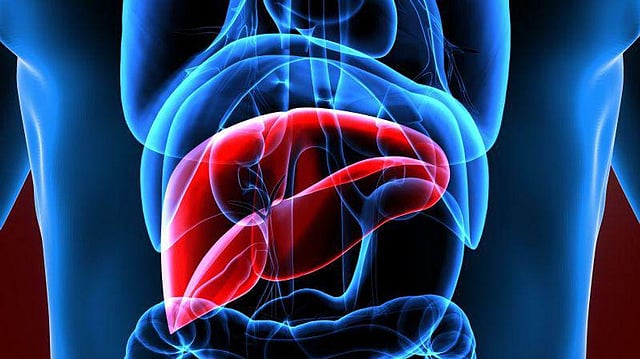
Similar decline in liver fat fraction seen for sleeve gastrectomy, Roux-en-Y gastric bypass from surgery to one-year follow-up
MONDAY, Nov. 29, 2021 (HealthDay News) — Sleeve gastrectomy (SG) and Roux-en-Y gastric bypass (RYGB) are highly effective for reducing hepatic steatosis in patients with severe obesity and type 2 diabetes, with almost complete clearance of liver fat one year after surgery, according to a study published online Nov. 30 in the Annals of Internal Medicine.
Kathrine Aglen Seeberg, M.D., from the University of Oslo in Norway, and colleagues compared the one-year effects of SG and RYGB on hepatic steatosis and fibrosis in a single-center randomized controlled trial involving 100 patients with type 2 diabetes (mean body mass index, 42 kg/m2) from a tertiary care obesity center. Participants were randomly assigned in a 1:1 ratio to SG or RYGB.
The researchers found that from surgery to one-year follow-up, the decline in liver fat fraction was similar after SG and RYGB (−19.7 and −21.5 percent, respectively); at one year, almost all patients had no or low-grade steatosis (SG, 94 percent; RYGB, 100 percent). In 77 percent of patients, the enhanced liver fibrosis score category remained stable; however, at one year, 18 percent experienced worsening of fibrosis, with no substantial difference between the groups.
“RYGB and SG were both highly effective in reducing hepatic steatosis in patients with type 2 diabetes mellitus,” the authors write. “Both procedures stand out as appropriate treatment options to reduce the burden of nonalcoholic fatty liver disease.”
Abstract/Full Text (subscription or payment may be required)
.jpg) Pregnancy Complications Linked to Subsequent Risk for Cardiometabolic-Renal Conditions
Pregnancy Complications Linked to Subsequent Risk for Cardiometabolic-Renal Conditions  GLP-1 Receptor Agonists, SGLT-2is Slow Renal Function Decline in T2D With Albuminuria
  Steatotic Liver Disease Risk Scores Compared for Predicting Cirrhosis
  Cirrhosis Can Recur After Liver Transplant
  Genetics, Diabetes Tied to MASLD-Associated Cirrhosis Before Age 50
  Increase Seen in Rates of Xenobiotic-Induced Liver Injury From 2020 to 2024
  Link Between Liver Fibrosis in MASLD, ASCVD Varies by Glycemic Status


.jpg)

