


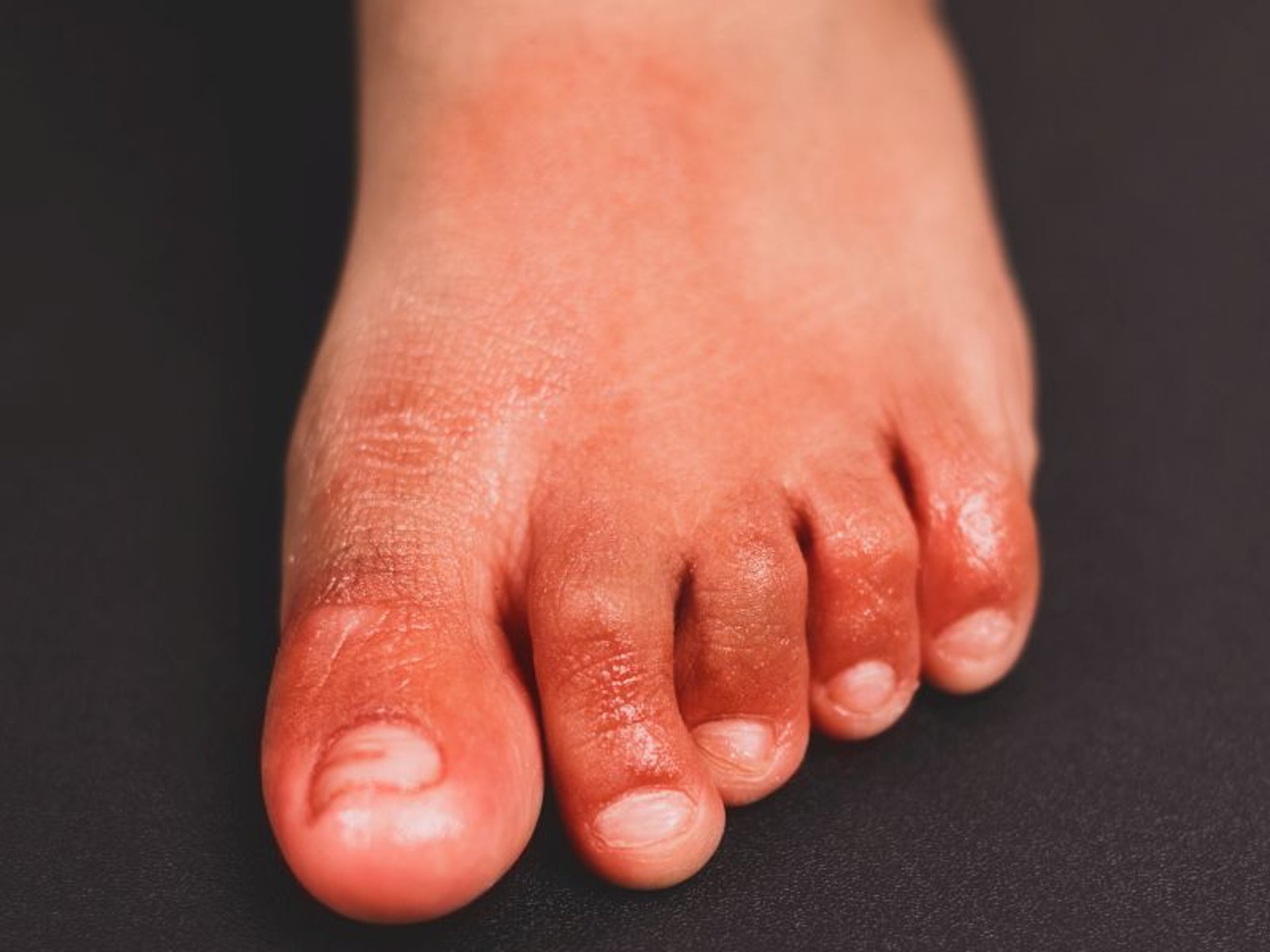
Findings based on systematic clinical, histologic, and biologic assessment
TUESDAY, Dec. 1, 2020 (HealthDay News) — Patients presenting with chilblain-like lesions during the COVID-19 pandemic have histologic and biologic patterns of type I interferonopathy, according to a study published online Nov. 25 in JAMA Dermatology.
Thomas Hubiche, M.D., from Université Côte d’Azur in Nice, France, and colleagues assessed 40 consecutive patients presenting with chilblain-like lesions during the COVID-19 pandemic. Patients underwent skin biopsies, vascular investigations, biologic analyses, interferon-alpha stimulation and detection, and severe acute respiratory syndrome coronavirus 2 (SARS-CoV-2) polymerase chain reaction and serologic analysis.
The researchers found that most patients were young, with a median age of 22 years, and 19 patients were male. Chilblain-like lesions were mostly on the toes. Eleven patients had bullous and necrotic evolution, while 19 had acrocyanosis or cold toes. Just over one-fourth of patients (27.5 percent) had criteria compatible with COVID-19 cases within six weeks of the eruption, although all rapid testing results were negative. SARS-CoV-2 serology results were positive in 12 patients (30 percent). Six in 10 patients had elevated D-dimer concentration levels. All patients tested negative for cryoglobulinemia and parvovirus B19. Lymphocytic inflammation and vascular damage with thickening of venule walls and pericyte hyperplasia were the major histologic findings.
“Taken together, our results suggest that chilblain-like lesions observed during the COVID-19 pandemic represent manifestations of a viral-induced type I interferonopathy,” the authors write.
 Holding DMARDs at Time of COVID-19 Vaccine Not Warranted in Those With Inflammatory Arthritis
 .jpg) ASH Issues Guidance on Serum Ferritin Thresholds for Diagnosing Iron Deficiency
ASH Issues Guidance on Serum Ferritin Thresholds for Diagnosing Iron Deficiency  Elevated C-Reactive Protein Linked to Increased Risk for Incident Heart Failure, All-Cause Mortality
  Congenital Ichthyosis Linked to Allergic Disorders
  Distinct Skin Microbiome Features Emerge Before Atopic Disease Onset in Infants
  Freshwater Swimming Tied to Stomach Bugs, Skin Conditions
  Considerable Global Disparities Found in Access to Dermatological Care
  Extreme Heat Linked to 33 Clinically Reportable Diagnoses




.jpg)