


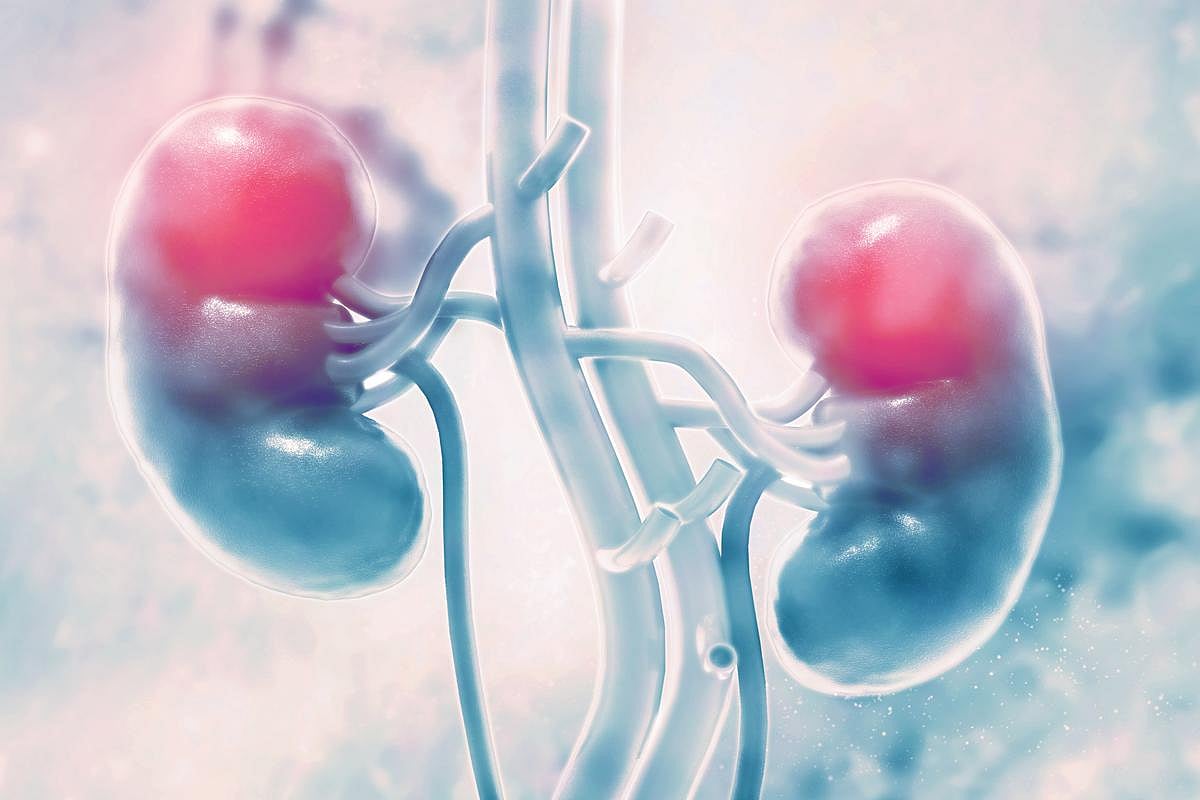
However, chronic kidney disease is increasingly associated with diabetes and heart failure
TUESDAY, July 14, 2026 (HealthDay News) — Chronic kidney disease (CKD) is increasingly associated with diabetes, according to a research letter published online July 8 in the New England Journal of Medicine.
Sophie E. Claudel, M.D., from the Boston Medical Center, and Ashish Verma, M.B.B.S., from Boston University, examined contemporary national trends in CKD prevalence. The analysis included data for 25,106 adults (20 years of age and older) who participated in four cycles of the National Health and Nutrition Examination Survey from 2013-2014 to 2021-2023.
The researchers found that the prevalence of CKD was generally stable between 2013-2014 (14.5 percent) and 2021-2023 (14.8 percent), corresponding to an estimated 36 million adults. Throughout the study period, a greater proportion of adults met criteria based on albuminuria alone than on a low estimated glomerular filtration rate (eGFR) alone (8.6 versus 4.1 percent in 2021-2023). There was variance in the prevalence of CKD by demographic characteristics and comorbidity burden, with a higher prevalence among Black adults and those living below the federal poverty threshold. Over time, the burden of CKD with diabetes increased from 4.7 percent in 2013-2014 to 5.7 percent in 2021-2023 (prevalence ratio, 1.29), with no change in the prevalence of CKD without diabetes. There was also a strong association between heart failure and prevalent CKD, with this association peaking in the 2021-2023 cycle (adjusted prevalence ratio, 2.47), surpassing obesity (adjusted prevalence ratio, 1.35) and rivaling diabetes (adjusted prevalence ratio, 2.49) as the coexisting condition most strongly associated with CKD.
“This is the first CKD study to utilize the recently released survey data spanning a decade, encompassing the period during which the first therapies specifically approved to protect the kidneys, namely SGLT2 inhibitors and finerenone (a nonsteroidal mineralocorticoid receptor antagonist that mitigates the risk of kidney failure), were introduced into the market. Remarkably, despite these advancements, overall CKD rates have remained stagnant,” Verma said in a statement.
Abstract/Full Text (subscription or payment may be required)
.jpg) Pregnancy Complications Linked to Subsequent Risk for Cardiometabolic-Renal Conditions
Pregnancy Complications Linked to Subsequent Risk for Cardiometabolic-Renal Conditions  GLP-1 Receptor Agonists, SGLT-2is Slow Renal Function Decline in T2D With Albuminuria
  Elevated C-Reactive Protein Linked to Increased Risk for Incident Heart Failure, All-Cause Mortality
  Early Complications Common in Older Kidney Transplant Recipients
  Implant, Patient Survival Do Not Differ for Robotic and Conventional Total Joint Replacement
  Physical Therapist-Supervised Exercise Improves Outcomes After ACL Reconstruction
 .jpeg) 1997 to 2022 Saw Increase in Pediatric Hospitalizations With AKI
1997 to 2022 Saw Increase in Pediatric Hospitalizations With AKI  Frailty Linked to Incident Cognitive Decline in Men With CKD

.jpg)

