


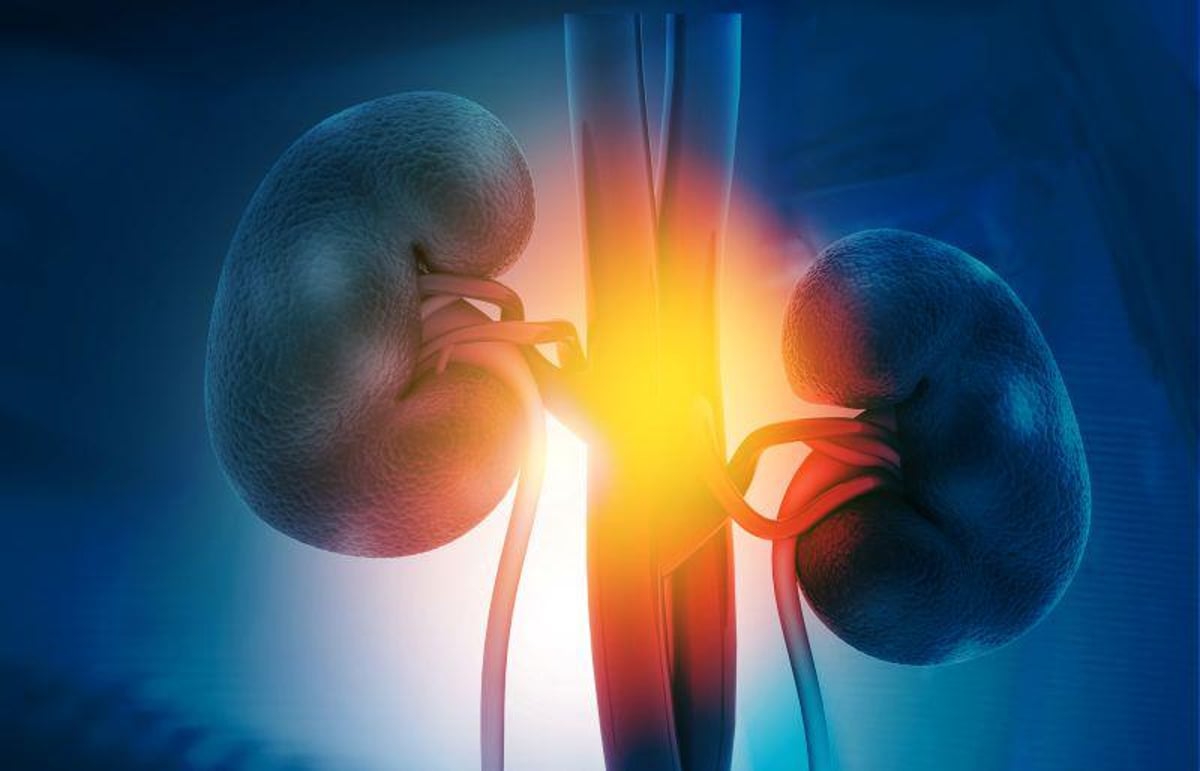
Risk for chronic kidney disease progressively higher in overweight and obese versus normal-weight metabolically healthy individuals
MONDAY, Sept. 26, 2022 (HealthDay News) — Metabolically healthy overweight and obese individuals may have an increased risk for chronic kidney disease (CKD), according to a study published online Sept. 19 in the European Journal of Clinical Investigation.
Mehmet Kanbay, M.D., from the Koc University School of Medicine in Istanbul, Turkey, and colleagues conducted a systematic review and meta-analysis to examine the associations between obesity and CKD independent of metabolic syndrome by focusing on metabolically healthy obese people. Data were included from 16 studies, with 4,965,285 participants.
Across individual studies, there was considerable heterogeneity in study design, participant characteristics, and number of participants. The researchers found that the risk for CKD was progressively higher in overweight and obese patients compared with healthy normal-weight participants (relative risks, 1.29 and 1.47, respectively).
“The prevalence of metabolically healthy obesity is about 35 percent in obese persons,” the authors write. “Intervening for this condition could have important public health implications. Clinical studies assessing whether lifestyle and pharmacologic treatment may prevent CKD and cardiovascular disease are needed in the metabolically healthy overweight and obese population.”
Abstract/Full Text (subscription or payment may be required)
.jpg) Pregnancy Complications Linked to Subsequent Risk for Cardiometabolic-Renal Conditions
Pregnancy Complications Linked to Subsequent Risk for Cardiometabolic-Renal Conditions  GLP-1 Receptor Agonists, SGLT-2is Slow Renal Function Decline in T2D With Albuminuria
 .jpeg) 1997 to 2022 Saw Increase in Pediatric Hospitalizations With AKI
1997 to 2022 Saw Increase in Pediatric Hospitalizations With AKI  Early Complications Common in Older Kidney Transplant Recipients
  Implant, Patient Survival Do Not Differ for Robotic and Conventional Total Joint Replacement
  Physical Therapist-Supervised Exercise Improves Outcomes After ACL Reconstruction
  Frailty Linked to Incident Cognitive Decline in Men With CKD
  UACR, UPCR Provide Indistinguishable Prognostic Information in CKD

.jpg)

