


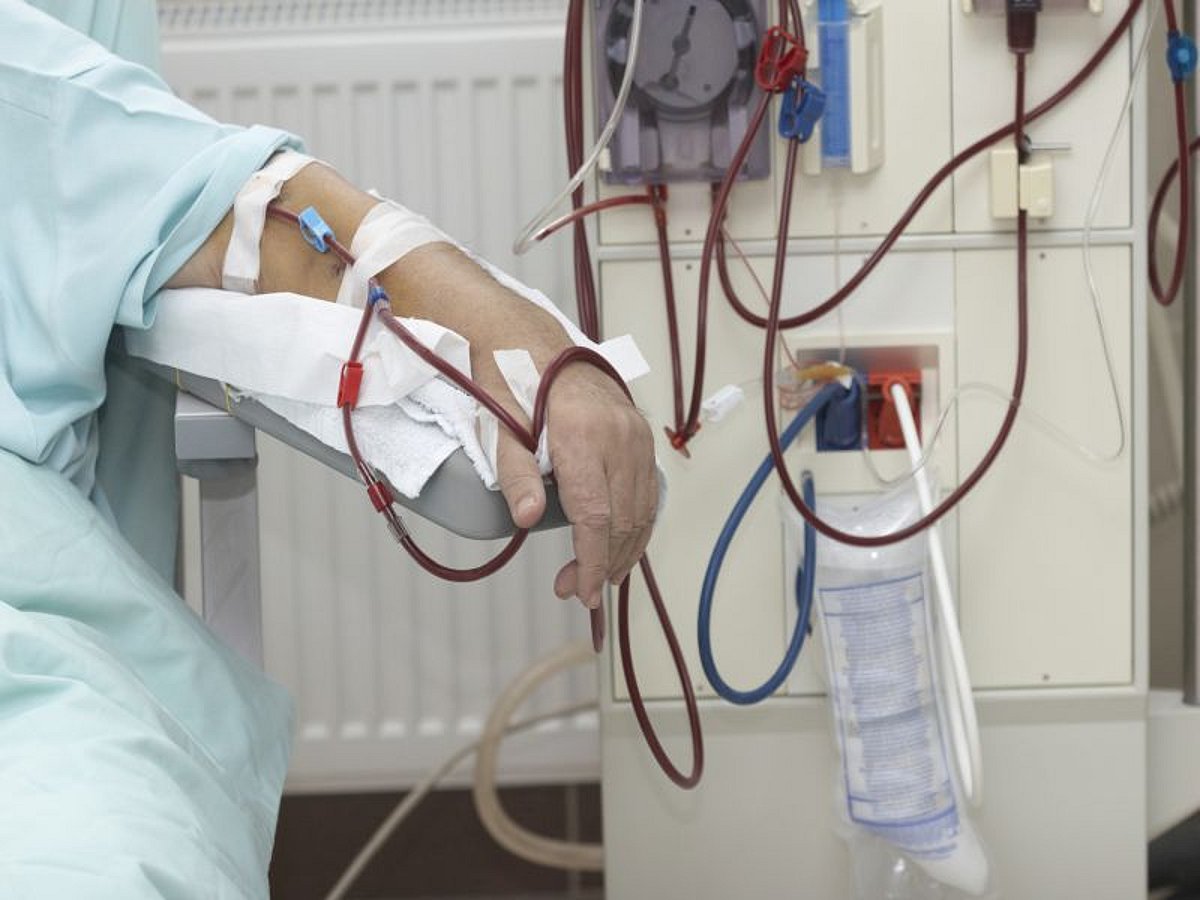
 Many kidney recipients with COVID-19 do not need to be hospitalized; deaths up for those on hemodialysis
FRIDAY, July 10, 2020 (HealthDay News) — Many outpatient kidney transplant recipients with COVID-19 have symptomatic resolution without requiring hospitalization, and hospitalized COVID-19 patients on hemodialysis have worse outcomes than those without kidney failure, according to two studies recently published in the Clinical Journal of the American Society of Nephrology.
S. Ali Husain, M.D., from the Columbia University College of Physicians and Surgeons in New York City, and colleagues obtained clinical data for 41 consecutive kidney transplant recipients seen as outpatients for known or suspected COVID-19 (22 confirmed cases; 19 suspected cases). The researchers found that patients most often reported fever, cough, and dyspnea (80, 56, and 39 percent, respectively). Thirteen patients (32 percent) required hospitalization at a median of eight days after onset of symptoms; 23 (56 percent) had outpatient symptom resolution at a median of 12 days after onset of symptoms. Patients who required hospitalization were more likely to have reported dyspnea and had higher baseline creatinine.
Jun Wu, from the Wuhan University in China, and colleagues conducted a retrospective study involving 49 patients on maintenance hemodialysis and 52 patients without kidney failure who were all hospitalized for confirmed COVID-19. The researchers found differences in fatigue, dry cough, and fever for patients on hemodialysis versus controls (59 versus 83 percent; 49 versus 71 percent; 47 versus 90 percent, respectively). Patients on hemodialysis received more noninvasive ventilation (25 versus 6 percent); three patients received invasive ventilation (6 percent) and seven died (14 percent).
“As a nephrology community, we know that optimal COVID-19 disease management is still being debated, and the therapeutic approach still lacks significant evidence,” write the authors of an accompanying editorial.
.jpg) Pregnancy Complications Linked to Subsequent Risk for Cardiometabolic-Renal Conditions
Pregnancy Complications Linked to Subsequent Risk for Cardiometabolic-Renal Conditions  GLP-1 Receptor Agonists, SGLT-2is Slow Renal Function Decline in T2D With Albuminuria
  Early Complications Common in Older Kidney Transplant Recipients
 .jpeg) 1997 to 2022 Saw Increase in Pediatric Hospitalizations With AKI
1997 to 2022 Saw Increase in Pediatric Hospitalizations With AKI  Frailty Linked to Incident Cognitive Decline in Men With CKD
  UACR, UPCR Provide Indistinguishable Prognostic Information in CKD
 .jpg) Recommendations Updated for Management of Anemia in CKD
Recommendations Updated for Management of Anemia in CKD  More Advanced CKM Syndrome Linked to Worse Cardiovascular Health


.jpg)

