


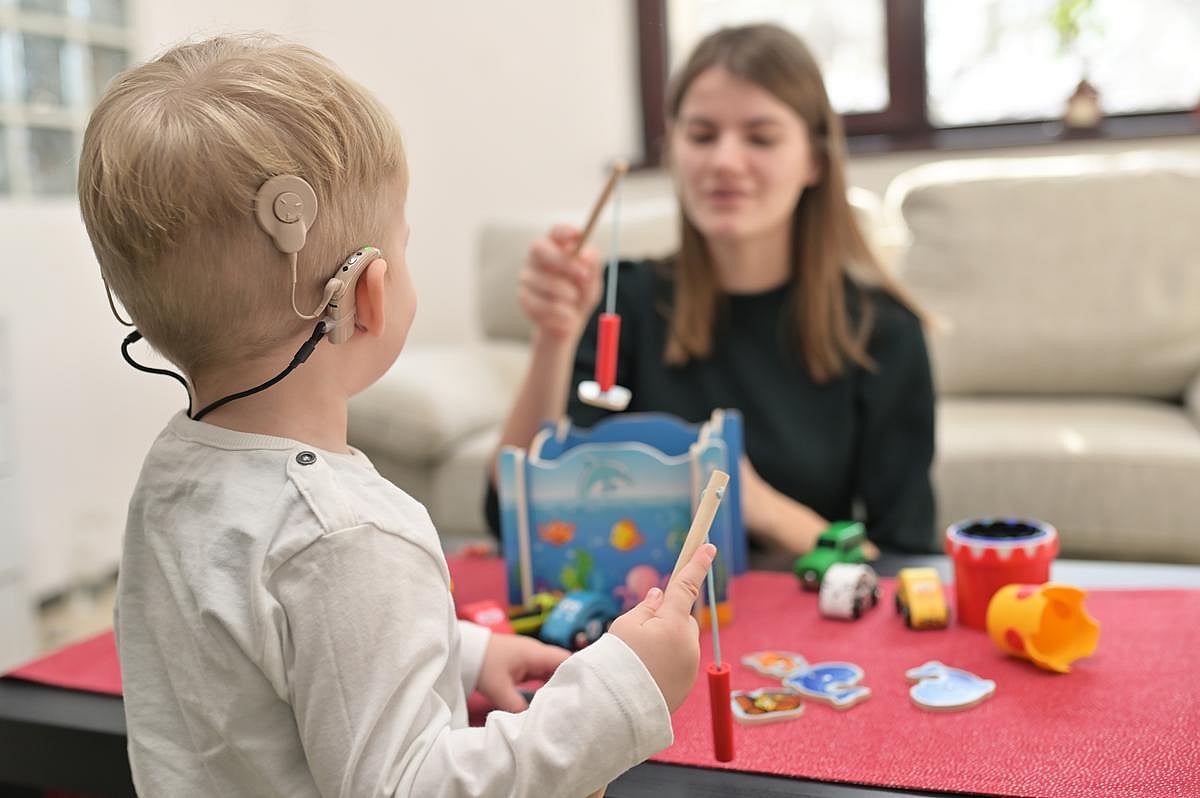
Deep transfer learning model outperforms traditional machine learning for predicting language improvement in children
TUESDAY, Jan. 6, 2026 (HealthDay News) — For children with cochlear implants, a deep transfer learning (DTL) algorithm has greater accuracy, sensitivity, and specificity than a machine learning (ML) model for predicting language improvement, according to a study published online Dec. 26 in JAMA Otolaryngology-Head & Neck Surgery.
Yanlin Wang, Ph.D., from The Chinese University of Hong Kong, and colleagues compared the accuracy of traditional ML and DTL algorithms to predict post-cochlear implant spoken language development in children with bilateral sensorineural hearing loss in a multicenter diagnostic study. A total of 278 children with cochlear implants were enrolled from July 2009 to March 2022. All children underwent pre-cochlear implant three-dimensional volumetric brain magnetic resonance imaging (MRI). Neuroanatomical features from presurgical brain MRI were used to train ML and DTL algorithms to predict high versus low language improvers.
The researchers found that using a bilinear attention-based fusion strategy, DTL prediction models achieved an accuracy of 92.39 percent, sensitivity and specificity of 91.22 and 93.56 percent, respectively, and an area under the curve of 0.98. In all outcome measures, DTL outperformed traditional ML models.
“This study supports the feasibility of the development of a single accurate DTL neural prediction model to use across centers and languages worldwide,” the authors write. “Accurate prediction of spoken language on the individual child level is a first step toward the creation of customized treatment plans to optimize language after implant.”
One author disclosed ties to MEDEL and holds a related patent.
 Voice Disorders Linked to Elevated Risk for Incident Cognitive Decline
  Hearing Loss Impacts 1 in 4 Patients With Diabetes
  Audiogram Pattern Predicts Recovery in Sudden Hearing Loss
  Contralateral Endolymphatic Hydrops ID"d in One in Four Patients With Unilateral Meniere Disease
  Brain Abnormalities Identified in Children at Risk for Schizophrenia
  Cortical Atrophy in Early-Onset Alzheimer Disease Signature Can Predict Progression to Dementia
  Imaging Turnaround Time Increased From 2023 to 2024
  Weight Cycling Linked to Increased Loss of Muscle Volume




.jpg)