


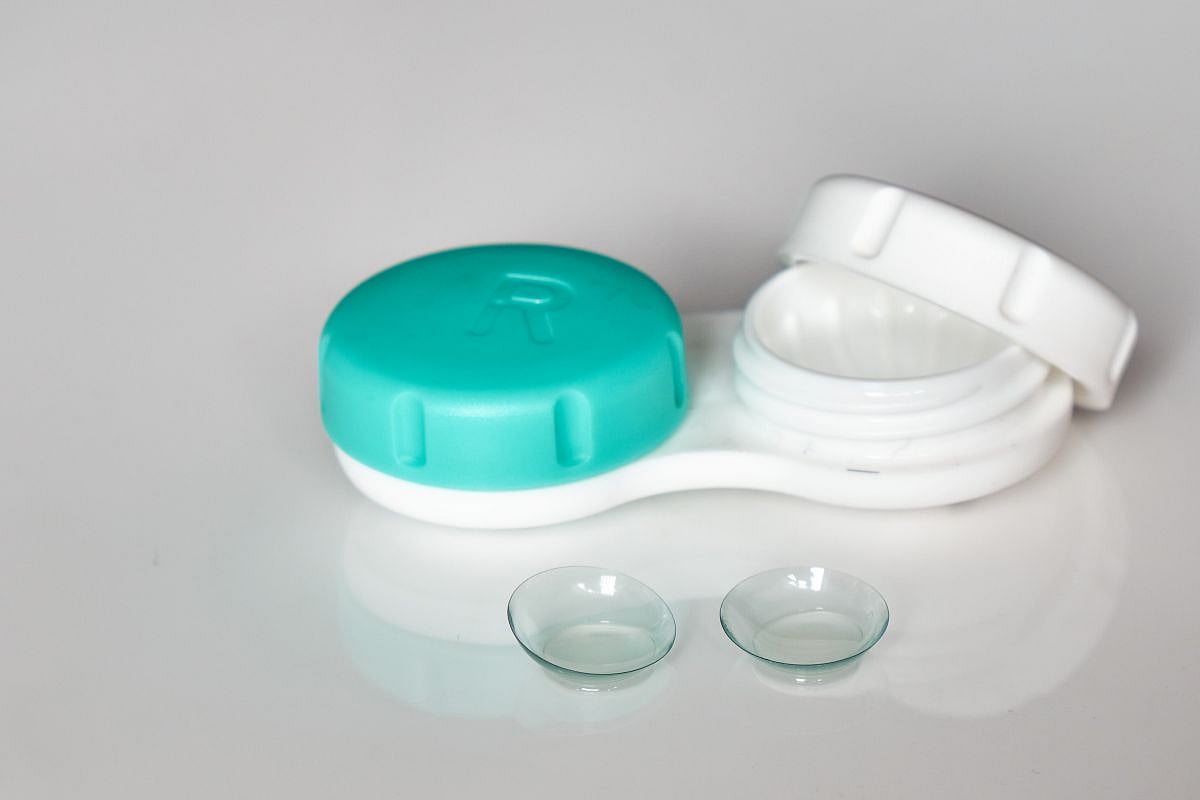
Greater BCVA improvement seen at one year for children with poor spectacle response wearing rigid gas-permeable contact lenses versus those continuing spectacles
TUESDAY, Nov. 25, 2025 (HealthDay News) — For children undergoing primary congenital glaucoma (PCG) surgery, use of rigid gas-permeable contact lenses (RGPCLs) is associated with superior visual acuity compared with spectacles, according to a study published online Nov. 6 in JAMA Ophthalmology.
Jinyun Jiang, M.D., Ph.D., from the State Key Laboratory of Ophthalmology in Guangzhou, China, and colleagues conducted a randomized trial to compare the use of RGPCLs versus continued spectacle use for improving visual outcomes for children after PCG surgery (aged 4 to 15 years). Fifty-six children with surgically managed PCG and poor spectacle response were randomly assigned to RGPCLs or spectacles for 12 months (29 and 27 patients, respectively), plus standardized amblyopia patching.
The researchers found that in the RGPCL and spectacles groups, the mean baseline worse-eye spherical equivalents were −6.55 and −5.17 diopters, respectively; the mean best corrected visual acuity (BCVA) was 0.99 and 1.02 logMAR, respectively (approximate Snellen equivalent, 20/200); and the mean intraocular pressure was 14.98 and 13.36 mm Hg, respectively. The RGPCL group had greater BCVA improvement at one year (mean, 0.31 versus 0.12 logMAR). Overall, 62.5 and 37.5 percent of participants in the RGPCL and spectacles groups, respectively, had achievement of two or more lines of BCVA improvement (odds ratio, 6.83). Greater contrast sensitivity function improvement was seen in the RGPCL group (0.40 versus 0.13). Near stereoacuity of 60 arcseconds or less was achieved by 50.0 and 25.0 percent in the RGPCL and spectacles groups, respectively (odds ratio, 6.96). There were no serious adverse events observed.
“These results support RGPCLs as an alternative for children with poor spectacle response,” the authors write.
Abstract/Full Text (subscription or payment may be required)
 Implant, Patient Survival Do Not Differ for Robotic and Conventional Total Joint Replacement
  Statin Use Linked to Lower Risk for Glaucoma Incidence
  Physical Therapist-Supervised Exercise Improves Outcomes After ACL Reconstruction
  Ambient Temperature Linked to Intraocular Pressure in Glaucoma
  Dexamethasone Eye Drops Can Reduce Progression to ROP Requiring Treatment
 .jpg) Tadalafil Linked to Glaucoma in Men With Lower Urinary Tract Symptoms
Tadalafil Linked to Glaucoma in Men With Lower Urinary Tract Symptoms  Atropine Eye Drops Reduce Myopia Progression in Children
  High Pillow Position Linked to Increased IOP in Glaucoma




.jpg)