


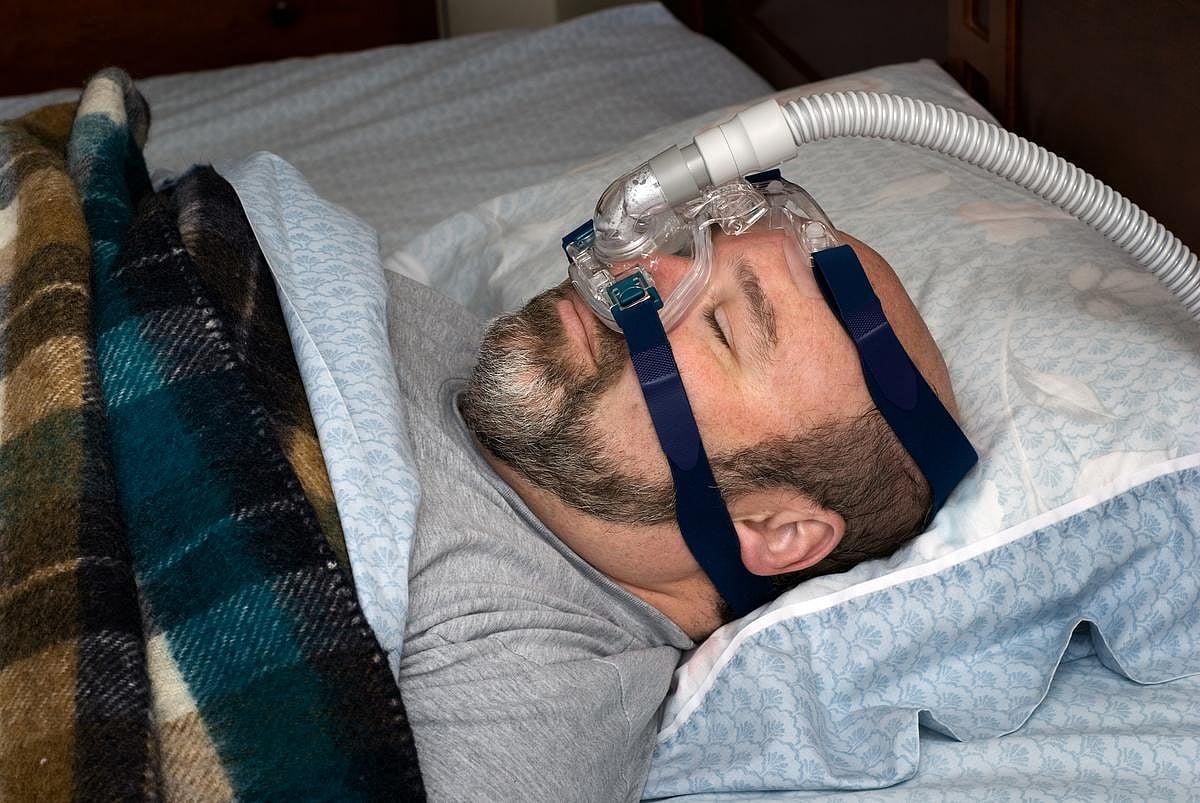
Findings seen particularly for tirzepatide compared with sodium-glucose cotransporter-2 inhibitors
MONDAY, Jan. 5, 2026 (HealthDay News) — Initiation of incretin receptor agonists (IRAs) is associated with lower continuous positive airway pressure (CPAP) use, hospitalization, and mortality among adults with obesity, type 2 diabetes, and obstructive sleep apnea (OSA), according to a research letter published online Dec. 22 in JAMA Network Open.
Huilin Tang, Ph.D., from the University of Pennsylvania in Philadelphia, and colleagues evaluated the effectiveness of IRA use in routine care among adults with obesity, type 2 diabetes, and OSA. The analysis included 36,981 matched pairs of adult IRA and sodium-glucose cotransporter-2 inhibitor (SGLT2i) users with obesity, diabetes, and OSA, identified from the TriNetX research network.
The researchers found that during a mean follow-up of 332.2 days, 6.6 percent of IRA and 7.2 percent of SGLT2i users received CPAP therapy. IRA use was associated with decreased risks for CPAP use (hazard ratio [HR], 0.92), all-cause mortality (HR, 0.68), and hospitalization (HR, 0.90) compared with SGLT2i use. Results generally were consistent across subgroups, although no association was found for CPAP use in women or older adults. There were decreased risks for CPAP use and mortality for tirzepatide and glucagon-like peptide-1 (GLP-1) receptor agonists compared with SGLT2is, with tirzepatide showing greater decreases than GLP-1 receptor agonists.
“The modest effect size for IRAs suggests limited clinical relevance for CPAP use alone, but reductions in mortality and hospitalization support broader cardiometabolic benefits,” the authors write.
Two authors disclosed financial ties to the pharmaceutical industry.
.jpg) Pregnancy Complications Linked to Subsequent Risk for Cardiometabolic-Renal Conditions
Pregnancy Complications Linked to Subsequent Risk for Cardiometabolic-Renal Conditions  GLP-1 Receptor Agonists, SGLT-2is Slow Renal Function Decline in T2D With Albuminuria
  Study IDs Risk Factors for Ketoacidosis in Adults With T2D Receiving SGLT2 Inhibitors
  Genetics, Diabetes Tied to MASLD-Associated Cirrhosis Before Age 50
  Steatotic Liver Disease Risk Scores Compared for Predicting Cirrhosis
  Cirrhosis Can Recur After Liver Transplant
  Family History of CRC Increases CRC Risk Similarly in IBD, General Population
  Relapse Rare After Appendiceal Adenocarcinoma Resection


.jpg)

