


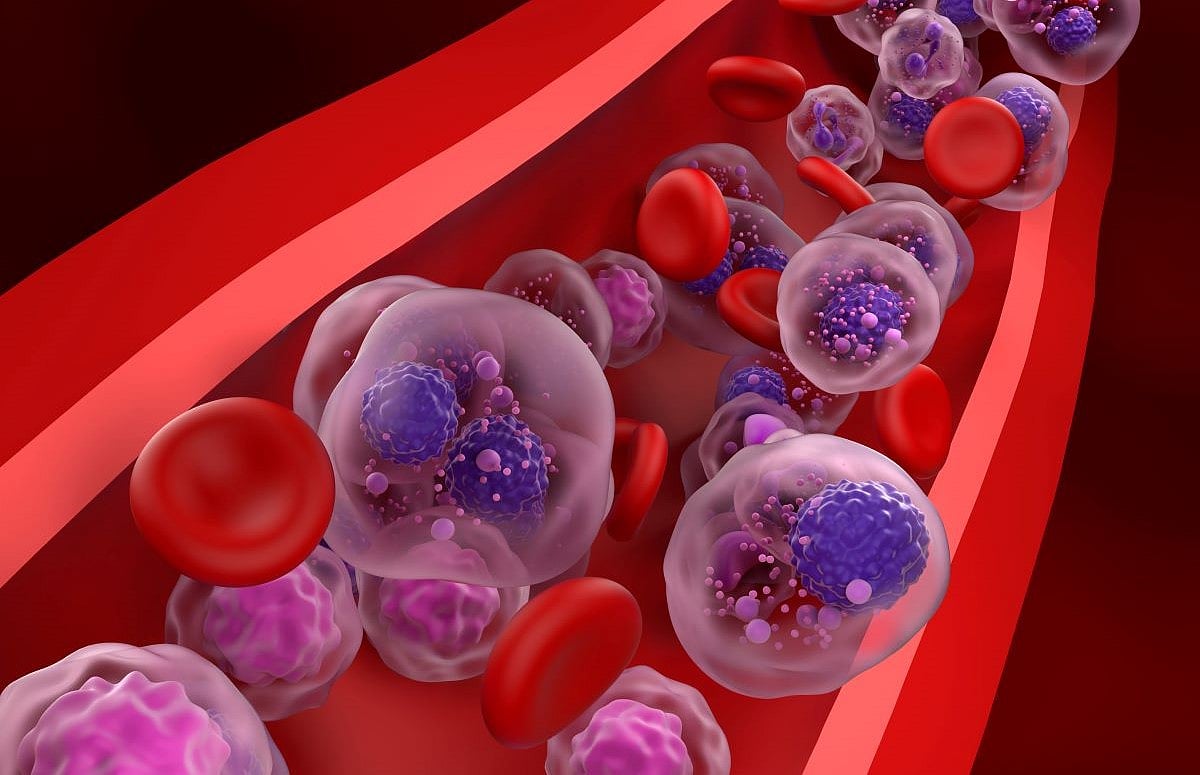
Findings seen in patients with standard-risk newly diagnosed MM not undergoing up-front autologous stem cell transplantation
THURSDAY, July 23, 2026 (HealthDay News) — For patients with standard-risk newly diagnosed multiple myeloma not undergoing up-front autologous stem cell transplantation, indefinite-duration maintenance therapy does not yield significantly longer overall survival compared with fixed-duration maintenance therapy, according to a study published in the July 16 issue of the New England Journal of Medicine.
Shaji Kumar, M.D., from the Mayo Clinic in Rochester, Minnesota, and colleagues conducted a phase 3 trial enrolling patients with standard-risk newly diagnosed multiple myeloma who were not undergoing up-front autologous stem cell transplantation. After proteasome inhibitor-lenalidomide combination induction treatment, patients were randomly assigned to receive indefinite-duration lenalidomide (continuous) or fixed-duration lenalidomide (two years; 260 and 256 patients, respectively).
The researchers found that overall survival did not differ between the groups at a median follow-up of 86 months. At seven years, overall survival was 68.6 and 69.0 percent in the indefinite-duration and fixed-duration groups, respectively (80 deaths in each group). At seven years, progression-free survival was 36.1 and 29.7 percent in the indefinite-duration and fixed-duration groups, respectively. The five-year cumulative incidence of second primary cancers was 11.2 and 8.3 percent with indefinite-duration and fixed-duration lenalidomide, respectively. There were more adverse events with indefinite-duration lenalidomide: The incidence rate of nonhematologic events of grade 3 or higher was 48.2 versus 31.5 percent with indefinite-duration versus fixed-duration therapy.
“This study reminds us that clinical trials shouldn”t only focus on adding new therapies,” Kumar said in a statement. “They should also help us understand when treatment can safely stop.”
Several authors disclosed ties to biopharmaceutical companies, including Amgen, which partially funded the study.
Abstract/Full Text (subscription or payment may be required)
 Rheumatic Immune-Related AEs With Immune Checkpoint Inhibitors More Severe Than Previously Reported
  Blinatumomab Improves Event-Free Survival in Children With High-Risk B-Cell ALL
  Stem Cell Treatment Feasible for Aniridia-Related Keratopathy
  Thymic Radiation Linked to Worse Outcomes in Patients With NSCLC
  Gene Mutation Identified That Increases Lung Cancer Risk
  ASTRO Issues Guidance for Use of Radiation Therapy in Bladder Cancer
  Recommendations Updated for Radiation Therapy in Pancreatic Cancer
  Aircrew Face Higher Odds of Radiation-Related Cancer Deaths


.jpg)

