


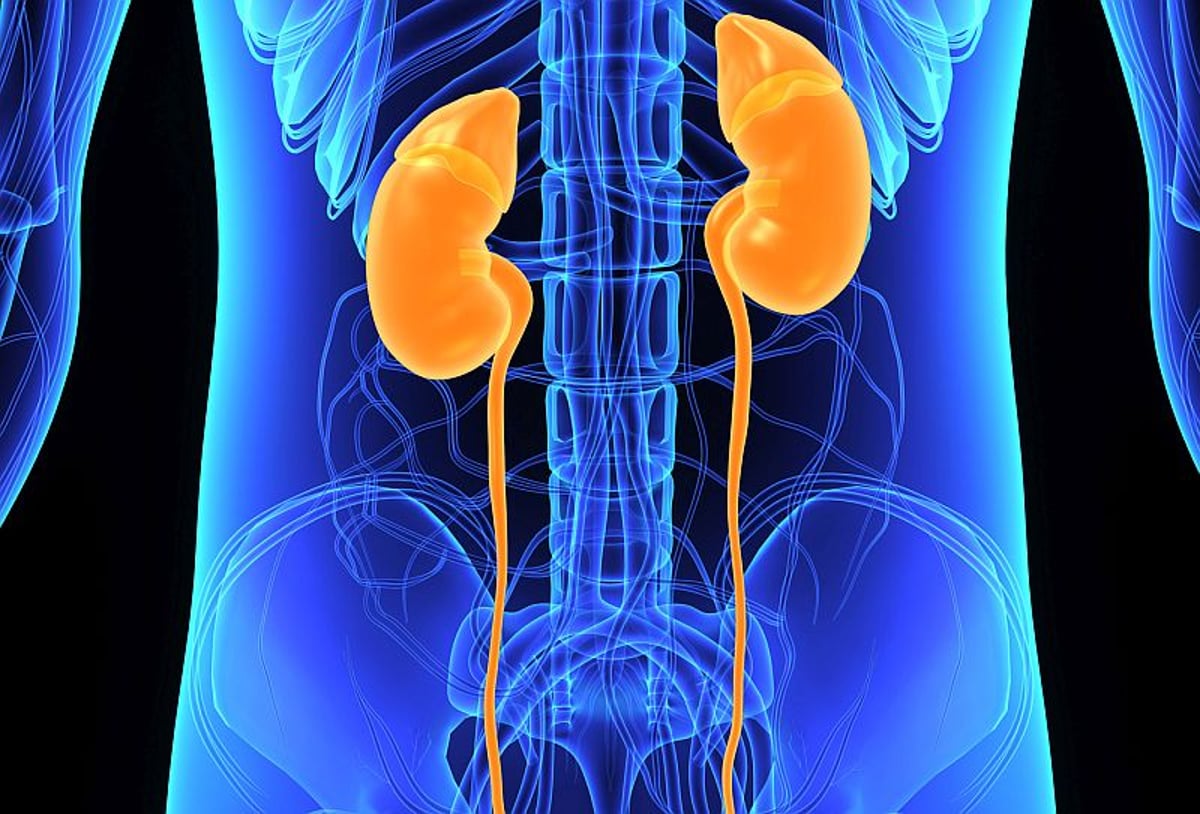
KFRE score >20 percent had similar specificity, higher sensitivity for predicting end-stage kidney disease than eGFR <20 mL/min/1.73 m2
THURSDAY, Jan. 13, 2022 (HealthDay News) — The four-variable Kidney Failure Risk Equation (KFRE) better predicts the two-year risk for end-stage kidney disease (ESKD) than estimated glomerular filtration (eGFR) alone, according to a study published online Jan. 11 in the Annals of Internal Medicine.
Joshua D. Bundy, Ph.D., M.P.H., from the Tulane University School of Public Health in New Orleans, and colleagues compared ESKD prediction performance of different eGFR equations in an observational prospective cohort study conducted at seven U.S. clinical centers involving 3,873 participants with chronic kidney disease. eGFR was calculated using five Chronic Kidney Disease Epidemiology Collaboration equations based on serum creatinine and/or cystatin C, with or without adjustment for race; KFRE was used to predict the two-year risk for ESKD.
The researchers found that 856 participants developed ESKD during a maximum follow-up of 16 years. The KFRE score was superior for predicting the two-year incidence of ESKD compared with eGFR alone across all eGFR equations (area under the curve ranges, 0.945 to 0.954 versus 0.900 to 0.927). The prediction performance of KFRE scores was similar using different eGFR equations, but calibration was improved among Black participants by using the creatinine equation without race adjustment. A KFRE score of >20 percent had similar specificity and higher sensitivity for predicting ESKD than an eGFR <20 mL/min/1.73 m2 among all participants.
“The four-variable KFRE showed better sensitivity and specificity in our study compared with eGFR alone, is easy to implement in routine clinical settings, and does not consider a patient’s race,” the authors write.
One author disclosed financial ties to Gilead Sciences.
Abstract/Full Text (subscription or payment may be required)
.jpg) Pregnancy Complications Linked to Subsequent Risk for Cardiometabolic-Renal Conditions
Pregnancy Complications Linked to Subsequent Risk for Cardiometabolic-Renal Conditions  Urine Cell-Free RNA Shows Promise as Biomarker for Bladder Cancer
  Age-, Joint-Specific Ultrasound Reference Values Set for Healthy Joints
  Pre-Prostate Biopsy MRI Use Increased From 2017 to 2026
  PET/MRI Offers Diagnostic, Prognostic Value in Pediatric Epilepsy
 .jpeg) Higher Intake of Saturated, Animal Fats May Increase Mortality in Prostate Cancer
Higher Intake of Saturated, Animal Fats May Increase Mortality in Prostate Cancer  Adverse Pathological Features Do Not Predict Benefit of Hormone Therapy in Prostate Cancer
  Focal Therapy Use Remains Uncommon in Nonmetastatic Prostate Cancer
 .jpg)




