


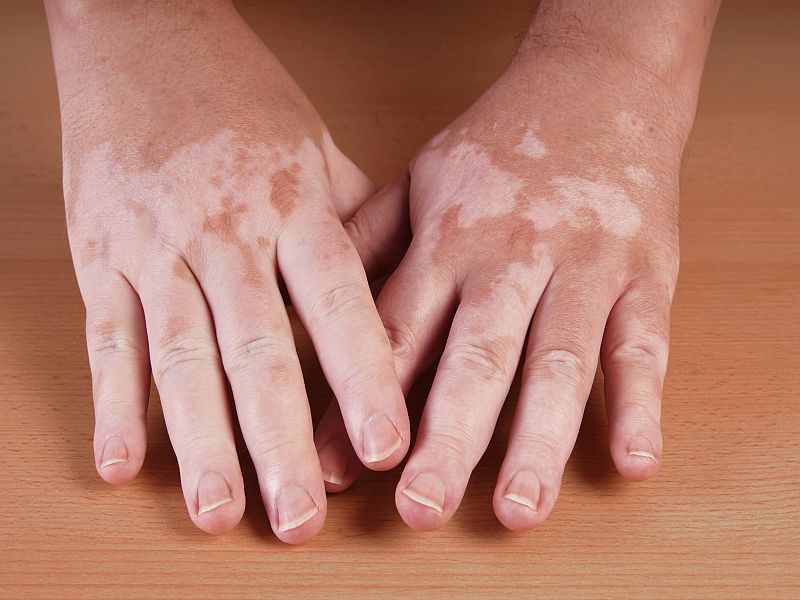
 5-fluorouracil achieved a higher percentage of repigmentation versus tacrolimus
THURSDAY, March 22, 2018 (HealthDay News) — Microneedling in combination with 5-fluorouracil is a safe and effective treatment for vitiligo, according to a study published online March 12 in the Journal of Cosmetic Dermatology.
Mary Mina, from Tanta University in Egypt, and colleagues studied the efficacy of microneedling followed by treatment with 5-fluorouracil versus treatment with tacrolimus, among 25 patients with vitiligo. Each patient had two patches microneedled with a dermapen before having one patch treated with an application of 5-fluorouracil and the other patch treated with tacrolimus. Patients had treatment every two weeks for a maximum of six months (12 sessions) and were followed for an additional three months.
The researchers found that overall repigmentation was significantly higher in the patches treated with 5-fluorouracil compared with tacrolimus. Excellent improvement was seen in 48 percent of the 5-fluorouracil-treated patches versus 16 percent of tacrolimus-treated patches. Similarly, in the acral parts, excellent improvement was seen in 40 percent of the patches treated with 5-fluorouracil versus no patches in the acral parts treated with tacrolimus. However, there were significantly more adverse reactions with 5-fluorouracil, including inflammation, ulceration, and hyperpigmentation.
“Microneedling combined with 5-fluorouracil or tacrolimus is safe and effective treatment of vitiligo,” the authors write.
Abstract/Full Text (subscription or payment may be required)
 Narrowband UVB Phototherapy Underused for Pediatric Vitiligo
  Ruxolitinib Cream Results in Greater Repigmentation in Vitiligo
  FDA Approves First Topical Treatment for Vitiligo
  Risk for Autoimmunity Up With Concomitant Vitiligo, Psoriasis
  Mortality, Comorbidity Risk Increased With Generalized Pustular Psoriasis
  Long-Term Risk for Incident Psoriasis Elevated With Irritable Bowel Syndrome
  Disease-Specific Immune Trajectories Identified Years Before IBD Onset
  Burden of Myocardial Dysfunction Elevated for Individuals With Psoriasis


.jpg)

