


Authors say health care providers should consider screening menopausal women without hot flashes for age-related loss of muscle mass
THURSDAY, Nov. 18, 2021 (HealthDay News) — Women with age-related loss of muscle mass may experience fewer hot flashes at menopause, according to a study published online Nov. 8 in Menopause.
Ki-Jin Ryu, M.D., from the Korea University College of Medicine in Seoul, and colleagues evaluated the association between vasomotor symptoms (VMS), skeletal muscle index (SMI), and sarcopenia in menopausal women. The analysis included 295 menopausal women (aged 40 to 65 years old) who underwent abdominal computed tomography during routine health checkups.
The researchers found that VMS were reported in 54.2 percent of women. Sarcopenia was more common in women without VMS (18.5 percent) versus those with symptoms (6.9 percent). The prevalence of sarcopenia was inversely associated with the prevalence of VMS (odds ratio, 0.32). The paraspinal muscle index was positively associated with the prevalence of VMS (odds ratio, 1.06) when adjusting for age, body mass index, waist circumference, adipose tissue area, history of hormone therapy, systolic and diastolic blood pressures, total cholesterol, insulin resistance, alcohol intake, and exercise.
“Considering that VMS are some of the major reasons that middle-aged women visit hospitals, health care providers should consider that menopausal women without VMS also need to be screened carefully given the high risk of sarcopenia observed in this study,” the authors write.
Abstract/Full Text (subscription or payment may be required)
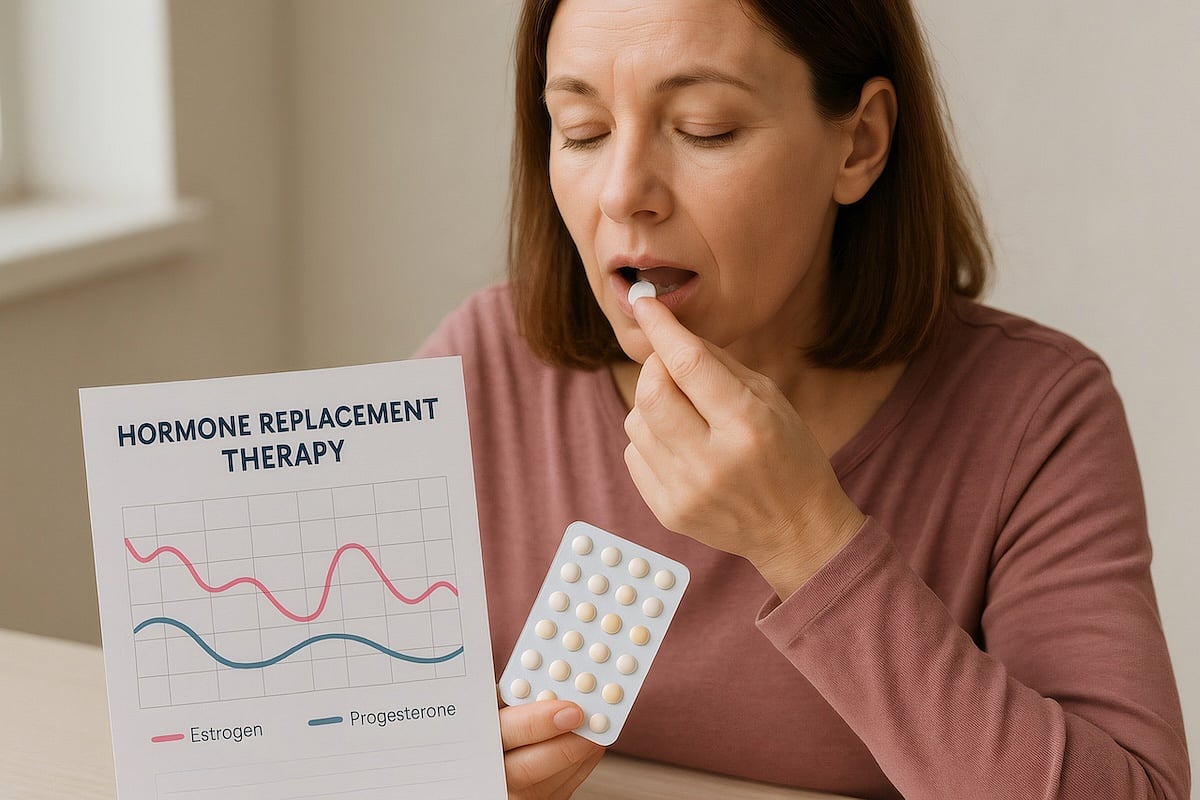 Oral Menopausal Hormone Therapy Linked to Venous Thromboembolic Risk
  MHT Initiation May Reduce Cardiovascular Risk in Women With Vasomotor Symptoms
  Longer Reproductive Lifespan Tied to Lower Bronchiectasis Risk in Postmenopausal Women
  Midlife Onset of Increasing Pulse Pressure Not Linked to Menopause
 .jpg) Pregnancy Complications Linked to Subsequent Risk for Cardiometabolic-Renal Conditions
Pregnancy Complications Linked to Subsequent Risk for Cardiometabolic-Renal Conditions  Isometric Exercise Training Three Times a Week Preserves Cardiovascular Benefits
  IBD Not Linked to Risk for Hypertensive Disorders of Pregnancy Overall
  Mortality in Injured Children Linked to Higher SBP Thresholds Than Those That Define Hypotension



.jpg)
