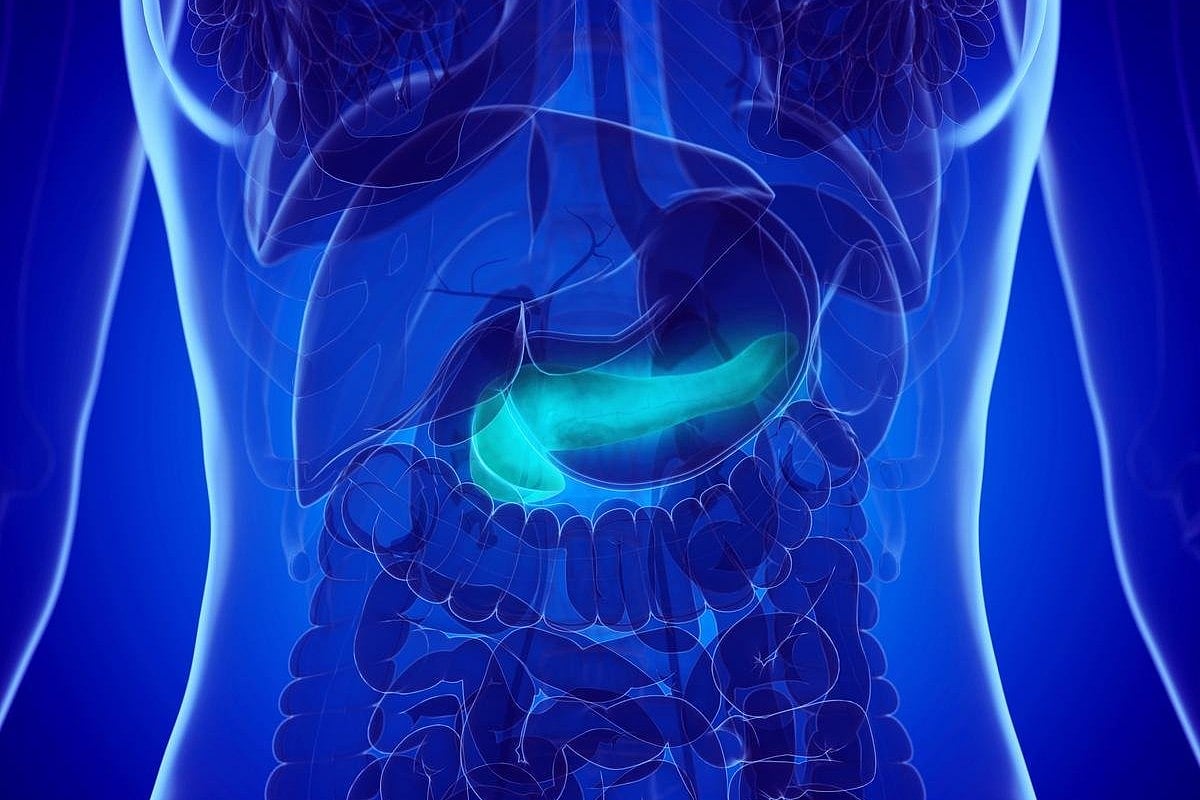
Tool shows good performance among patients with lymph node-negative PanNETs
TUESDAY, Dec. 30, 2025 (HealthDay News) — A new tool can help physicians determine which patients with localized pancreatic neuroendocrine tumors (PanNETs) have an increased risk for cancer recurrence, according to a study published online Dec. 17 in JAMA Surgery.
Marco Ventin, M.D., from Cedars-Sinai Medical Center in Los Angeles, and colleagues developed and validated a tumor recurrence and survival risk score for patients with lymph node-negative PanNETs. The analysis included data from 770 patients with localized PanNETs treated with surgery at five high-volume U.S. institutions from 2000 to 2023.
The researchers found that recurrence occurred in 82 patients (10.6 percent) at a median of 32.4 months after surgery. Independent predictors of recurrence included male sex (odds ratio [OR], 2.2), tumor size 3 cm or larger (OR, 2.64), World Health Organization grade 2 or higher (OR, 3.70), and lymphovascular invasion (OR, 3.84). The risk score demonstrated strong performance (area under the receiver operating characteristic, 0.83 internally; 0.95 externally). By risk group, recurrence rates were 2.4 percent, 9.0 percent, and 27.7 percent, while 10-year disease-free survival rates were 96.1 percent, 83.6 percent, and 51.3 percent for low-risk, moderate-risk, and high-risk groups, respectively. Recurrent tumors had higher tumor mutational burden, somatic mutation count, and somatic mutations in CDC42BPB, DAXX, ERI2, GALNT9, MTOR, NUMA1, and TRPC7 genes.
“We now have a way to identify patients whose higher risk of recurrence may have been previously overlooked,” coauthor Cristina R. Ferrone, M.D., also from Cedars-Sinai, said in a statement. “This gives us the opportunity to change the way we care for this patient population in a meaningful way.”
 Implant, Patient Survival Do Not Differ for Robotic and Conventional Total Joint Replacement
 .jpg) Most Specialty Oral Anticancer Meds for Blood Cancers Are Initially Rejected by Insurers
Most Specialty Oral Anticancer Meds for Blood Cancers Are Initially Rejected by Insurers  Personalized Support Boosts Families" Genetic Testing for Hereditary Cancers
  Exercise Intervention Linked to Improved Attention, Memory in Breast Cancer
 .jpg) Cancer Survivors Have Lower Levels of Physical Activity
Cancer Survivors Have Lower Levels of Physical Activity  Childhood Cancer Survivors Often Have Mental Distress in Adulthood
  Mindfulness, Tai Chi May Benefit Cancer Survivors
  Blinatumomab Improves Event-Free Survival in Children With High-Risk B-Cell ALL