


Patients with obesity have reduced risk for 365-day mortality, while patients with underweight have increased risk compared with BMI of 21.75
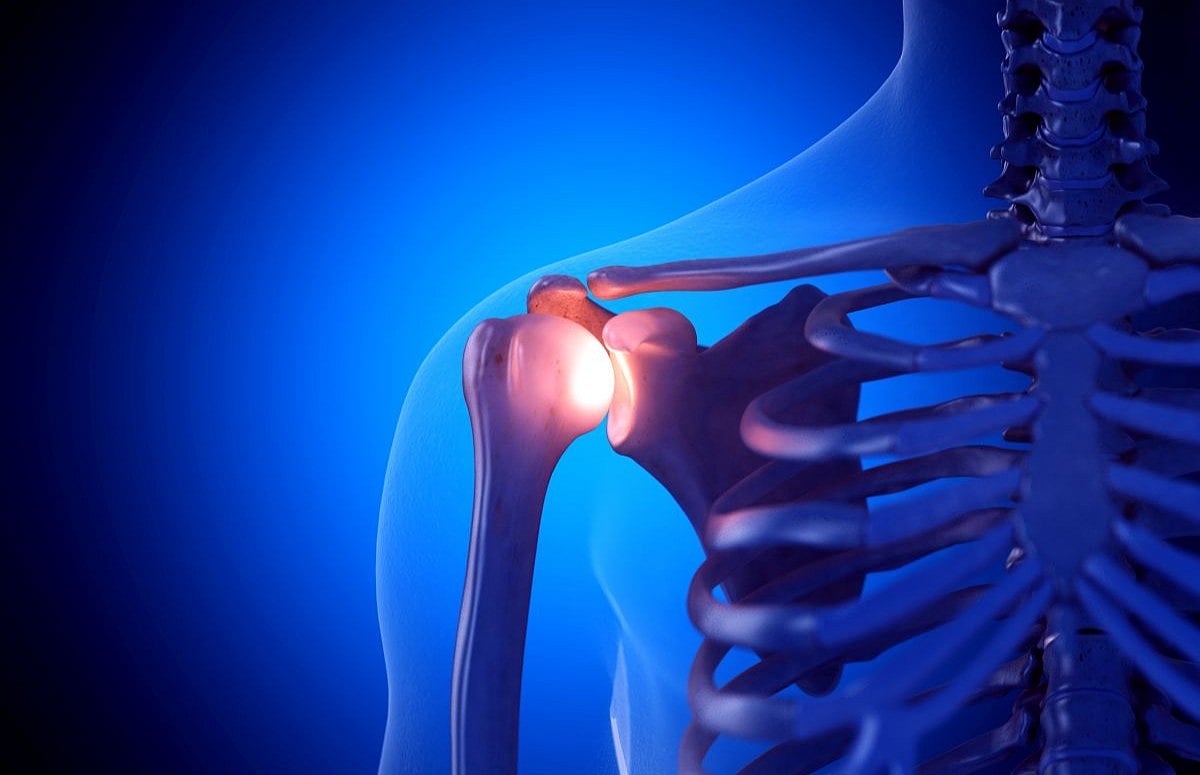
FRIDAY, Nov. 21, 2025 (HealthDay News) — Patients with underweight may have poorer outcome after shoulder replacement surgery, while a high body mass index (BMI) is not associated with an increased risk for death, according to a study published online Nov. 20 in PLOS Medicine.
Epaminondas Markos Valsamis, M.B., B.Chir., from the University of Oxford in the United Kingdom, and colleagues examined the association between BMI and patient outcomes after elective shoulder replacement surgery in a population-based cohort study. Patients having elective primary shoulder replacement surgery were identified from public and private hospitals in the United Kingdom (2018 to 2022) and Denmark (2006 to 2021); 15,320 and 5,446 procedures, respectively, met the inclusion criteria.
The researchers found that compared with patients with a BMI of 21.75 kg/m2, patients with obesity (BMI, ≥40 kg/m2) had a reduced risk for 365-day mortality (hazard ratio, 0.40) and patients with underweight (BMI <18.5 kg/m2) had an increased risk (hazard ratio, 1.18). An increased risk for 90-day mortality, 90-day serious adverse events, and revision surgery was seen for patients with underweight (hazard ratio, 1.69; odds ratio, 1.36; hazard ratio, 1.70, respectively). No significant association was seen for increasing BMI with an increased risk for any secondary outcome.
“Shoulder replacements offer patients the opportunity for excellent pain relief and improved quality of life,” Valsamis said in a statement. “Our research shows that patients with a higher BMI do not have poorer outcomes after shoulder replacement surgery.”
 Implant, Patient Survival Do Not Differ for Robotic and Conventional Total Joint Replacement
  Physical Therapist-Supervised Exercise Improves Outcomes After ACL Reconstruction
  Early Complications Common in Older Kidney Transplant Recipients
  PET/MRI Offers Diagnostic, Prognostic Value in Pediatric Epilepsy
  Drug Interactions Reducing Contraceptive Effectiveness Common in Epilepsy
  Pre-Prostate Biopsy MRI Use Increased From 2017 to 2026
  Frequent Cannabis Use Linked to Epilepsy Severity
  Less Intraoperative Crystalloid Fluid Not Tied to Worse Surgical Outcomes


.jpg)
