


Pain education, behavioral therapy delivered with physical therapy can help with physical function and pain intensity
THURSDAY, April 7, 2022 (HealthDay News) — For people with chronic, nonspecific low back pain, psychological interventions are most effective when delivered in conjunction with physical therapy care (mainly structured exercise), according to a review published online March 30 in The BMJ.
Emma Kwan-Yee Ho, from University of Sydney, and colleagues conducted a systematic literature review to identify randomized controlled trials comparing psychological interventions to any comparison intervention in adults with chronic (>12 weeks) nonspecific low back pain.
In a network meta-analysis of data from 97 randomized controlled trials (13,136 participants and 17 treatment nodes), the researchers found that for physical function, cognitive behavioral therapy (standardized mean difference [SMD], 1.01; 95 percent confidence interval [CI], 0.58 to 1.44) and pain education (SMD, 0.62; 95 percent CI, 0.08 to 1.17), delivered with physical therapy care, resulted in clinically important improvements at postintervention (moderate-quality evidence). For pain intensity, there were clinically important effects noted at postintervention (low- to moderate-quality evidence) for behavioral therapy (SMD, 1.08; 95 percent CI, 0.22 to 1.94), cognitive behavioral therapy (SMD, 0.92; 95 percent CI, 0.43 to 1.42), and pain education (0.91; 95 percent CI, 0.37 to 1.45), delivered with physical therapy care. Only behavioral therapy plus physical therapy care maintained clinically important reductions in pain intensity until midterm follow-up (SMD, 1.01; 95 percent CI, 0.41 to 1.60; high-quality evidence).
“Findings from our study can be used to inform clearer guideline recommendations regarding the use of specific psychological interventions for managing chronic, nonspecific low back pain and support decision making for patients and clinicians,” the authors write.
 Physical Therapist-Supervised Exercise Improves Outcomes After ACL Reconstruction
 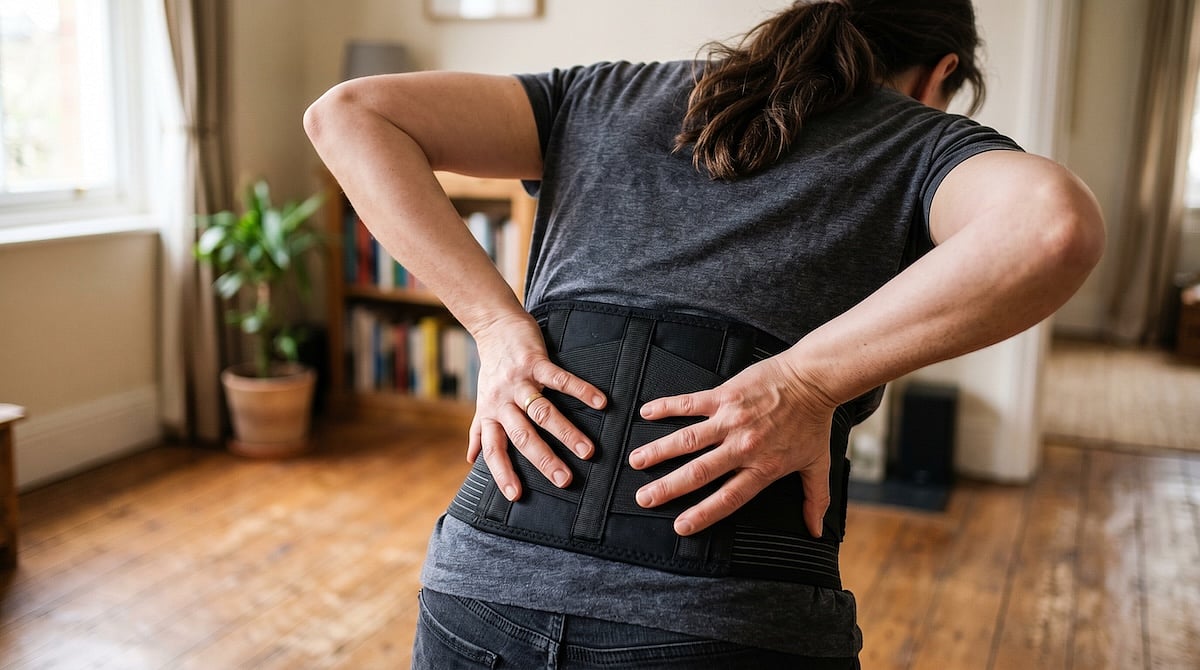 Evidence Insufficient to Support Routine Lumbar Support Use for Chronic Low Back Pain
  Swimming Program May Provide Short-Term Relief From Chronic Low Back Pain
  Individualized, Goal-Oriented Cognitive Rehab Beneficial for Long COVID
  Fluoxetine, CBT, and Combination Beneficial for Youths With Anxiety Disorders
  IBD-Specific Cognitive Behavioral Teletherapy Protocol Reduces IBD-Related Disability
  18 Percent of Adults With Tinnitus Reduce Work Hours, Stop Work
  Tai Chi Effective for Long-Term Management of Insomnia
 .jpg)




