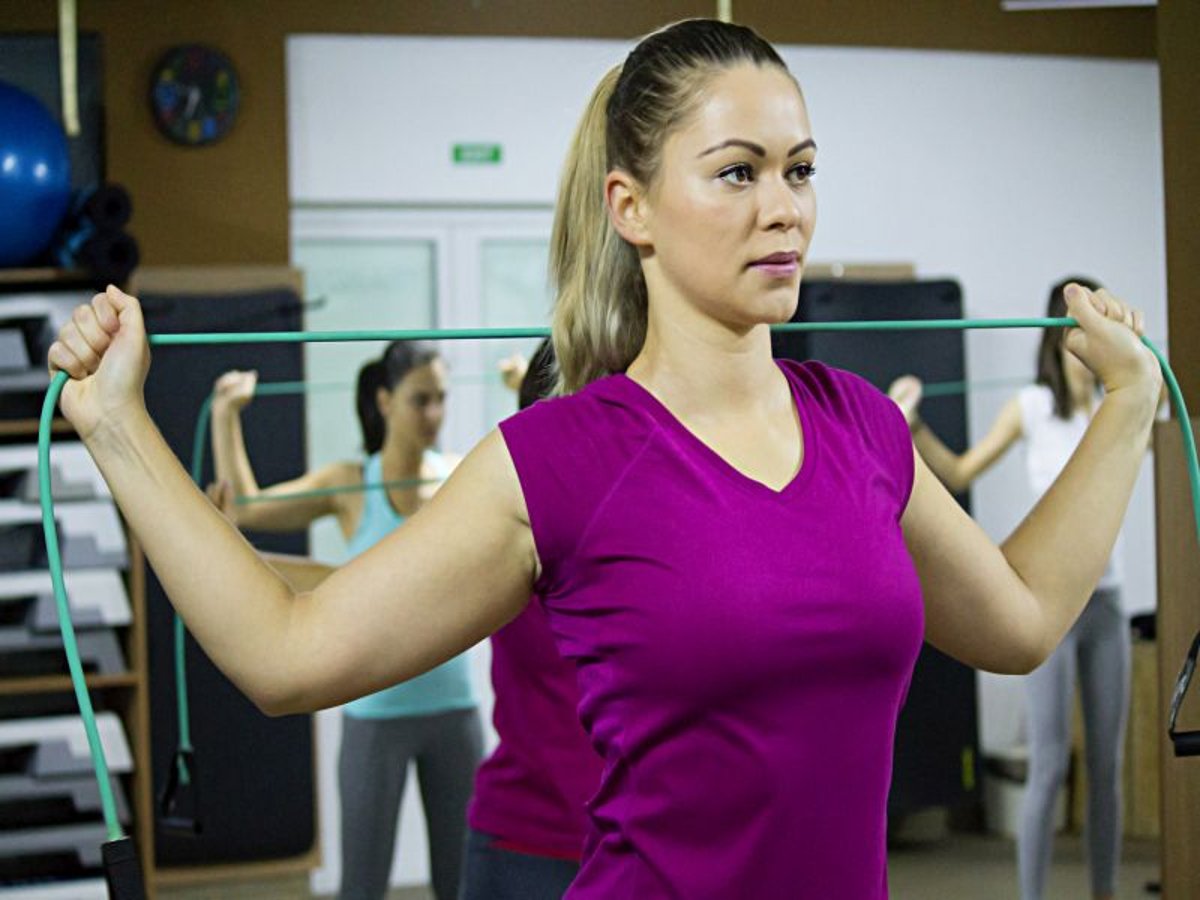
Self-reported increase in sleep duration seen with resistance exercise but not aerobic exercise, combined exercise, or no exercise (control)
MONDAY, March 14, 2022 (HealthDay News) — Resistance exercise may be better than aerobic exercise for improving the duration and quality of sleep among individuals with a high risk for cardiovascular disease, according to a study presented at the American Heart Association Epidemiology and Prevention/Lifestyle and Cardiometabolic Health 2022 Scientific Sessions, held from March 1 to 4 in Chicago.
Angelique G. Brellenthin, Ph.D., and Duck-chul Lee, Ph.D., from Iowa State University in Ames, randomly assigned 406 inactive adults (53 percent women; ages 35 to 70 years) with overweight/obesity and elevated/stage 1 hypertension with a high risk for cardiovascular disease to aerobic exercise (AE) only (101 participants), resistance exercise (RE) only (102 participants), combined AE and RE (CE; 101 participants), or a no-exercise control group (102 participants) for one year.
The rate of exercise adherence was 83 percent. The researchers found that all groups showed significant improvements in the Pittsburgh Sleep Quality Index total score and decreases in sleep disturbances. Among participants getting less than seven hours of sleep at baseline, sleep duration increased significantly by 17 minutes in the RE group, but not in the AE, CE, or control groups. Sleep efficiency increased in the RE and CE groups, but not in AE or control groups. There was a decrease noted in sleep latency in the RE group, although the overall between-within groups interaction effect was not significant.
“These results indicate that resistance exercise may have superior benefits on sleep compared to aerobic exercise, which could provide a novel pathway for the role of resistance exercise in promoting cardiovascular health,” the authors write.
 Air Pollution Does Not Impair Benefits of Walking in Reducing COPD Exacerbation Rate
  Physical Activity Linked to Slower Cognitive, Motor Progression in Parkinson Disease
  Exercise Intervention Linked to Improved Attention, Memory in Breast Cancer
  Exercise-Based Cardiac Rehab Beneficial for Coronary Heart Disease
  Isometric Exercise Training Three Times a Week Preserves Cardiovascular Benefits
  UACR, UPCR Provide Indistinguishable Prognostic Information in CKD
  Strength Training Not Tied to Ventricular Arrhythmia in Those With Arrhythmogenic Cardiomyopathy
  Use of SAMA, SABA Linked to Cardiovascular Events, Mortality in Asthma, COPD


.jpg)