


Meta-analysis also suggests acupuncture is better for reduction of visual analog scale score, responder rate
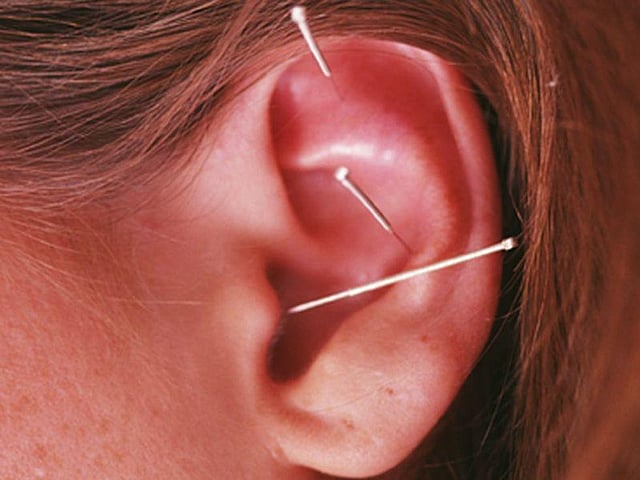
MONDAY, Dec. 6, 2021 (HealthDay News) — Acupuncture seems better than sham acupuncture for reducing the frequency of migraine attacks, intensity, and responder rate, according to a review and meta-analysis published online Nov. 26 in The Neurologist.
Mao Li, M.D., from the University of Traditional Chinese Medicine in Chengdu, China, and colleagues conducted a systematic literature review for randomized controlled trials to compare the efficacy of acupuncture versus sham acupuncture for migraine treatment. Data were included from 20 randomized trials involving 2,725 patients.
The researchers found that acupuncture was superior to sham acupuncture for reducing migraine frequency after treatment (mean difference, −0.52) and follow-up (mean difference, −0.51) using pooled data. For reducing visual analog scale scores, acupuncture was also superior to sham acupuncture after treatment and on follow-up (mean differences, −0.72 and −0.82, respectively). The efficacy of acupuncture was better than sham acupuncture for responder rate (relative risk, 1.28). However, there was no significant difference noted in the reduction of migraine days in the acupuncture or sham acupuncture groups after treatment or on follow-up.
“Although these findings indicate that acupuncture treatment was superior to sham acupuncture, the interstudy heterogeneity was too great to draw a definitive conclusion,” the authors write. “In this meta-analysis, we found evidence to support that the use of acupuncture may be of greater benefit to migraine patients than sham acupuncture.”
 Chronic Migraines More Common in Women With Enlarged Breast Tissue
  Updated Recommendations Address Medications to Prevent Migraine in Adults
  Botox Helpful in Alleviating Chronic Migraine in Pediatric Patients
  Press-Needle Therapy Shows Potential for Pediatric Allergic Rhinitis
  Full, Limited Functional Endoscopic Sinus Surgery Beneficial in Rhinosinusitis With Nasal Polyps
  Exacerbation Risk Profiles Vary With House Dust Mite Sensitization in Pediatric Asthma
  One-Third of Patients With Chronic Rhinosinusitis With Nasal Polyps Exhibit Anxiety Symptoms
  Hypoglossal Nerve Stimulation May Offer Long-Term Cardiovascular Benefits in OSA




.jpg)