


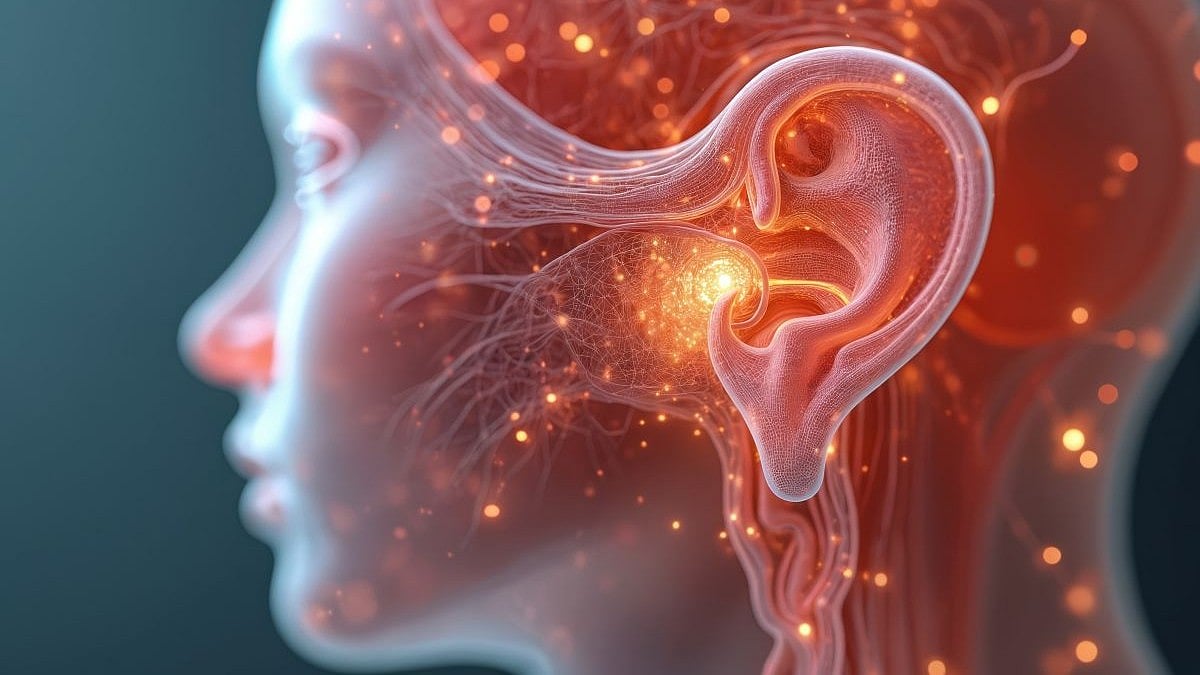
Significantly higher rate of subjective aural fullness relief seen for those treated with endolymphatic sac surgery combined with balloon dilatation of the Eustachian tube
MONDAY, Dec. 15, 2025 (HealthDay News) — For patients with Meniere disease (MD), Eustachian tube dysfunction (ETD) is associated with shorter disease duration and more severe aural fullness symptoms, according to a study published online Dec. 3 in Clinical Otolaryngology.
Yan Huang, M.D., from Sun Yat-sen Memorial Hospital in Guangzhou, China, and colleagues conducted a retrospective study in a tertiary referral center involving 287 patients with MD. Clinical parameters and treatment outcomes were compared between patients with MD with and without ETD and for those treated with endolymphatic sac surgery (ESS) alone or ESS combined with balloon dilatation of the Eustachian tube (BDET).
Overall, 96 patients with MD (33.4 percent) had ETD. The researchers found that patients with ETD had significantly shorter disease duration than those without ETD and experienced more severe aural fullness symptoms (61.5 versus 48.7 percent). The ETD group continued to demonstrate a significantly shorter disease duration than matched controls after adjustment for age, sex, and initial hearing threshold using propensity score matching (median, two versus three years). Compared with patients treated with ESS alone, those receiving ESS combined with BDET reported a significantly higher rate of subjective aural fullness relief (69.2 versus 30 percent) and a higher proportion of Class A vertigo improvement. ESS combined with BDET significantly correlated with improved aural fullness in logistic regression (odds ratio, 4.40).
“The presence of ETD may exacerbate symptoms in MD patients and shorten the interval before initial medical treatment,” the authors write.
Abstract/Full Text (subscription or payment may be required)
 Implant, Patient Survival Do Not Differ for Robotic and Conventional Total Joint Replacement
  Physical Therapist-Supervised Exercise Improves Outcomes After ACL Reconstruction
  Early Complications Common in Older Kidney Transplant Recipients
  PET/MRI Offers Diagnostic, Prognostic Value in Pediatric Epilepsy
  Drug Interactions Reducing Contraceptive Effectiveness Common in Epilepsy
  Pre-Prostate Biopsy MRI Use Increased From 2017 to 2026
  Frequent Cannabis Use Linked to Epilepsy Severity
  Less Intraoperative Crystalloid Fluid Not Tied to Worse Surgical Outcomes


.jpg)
