


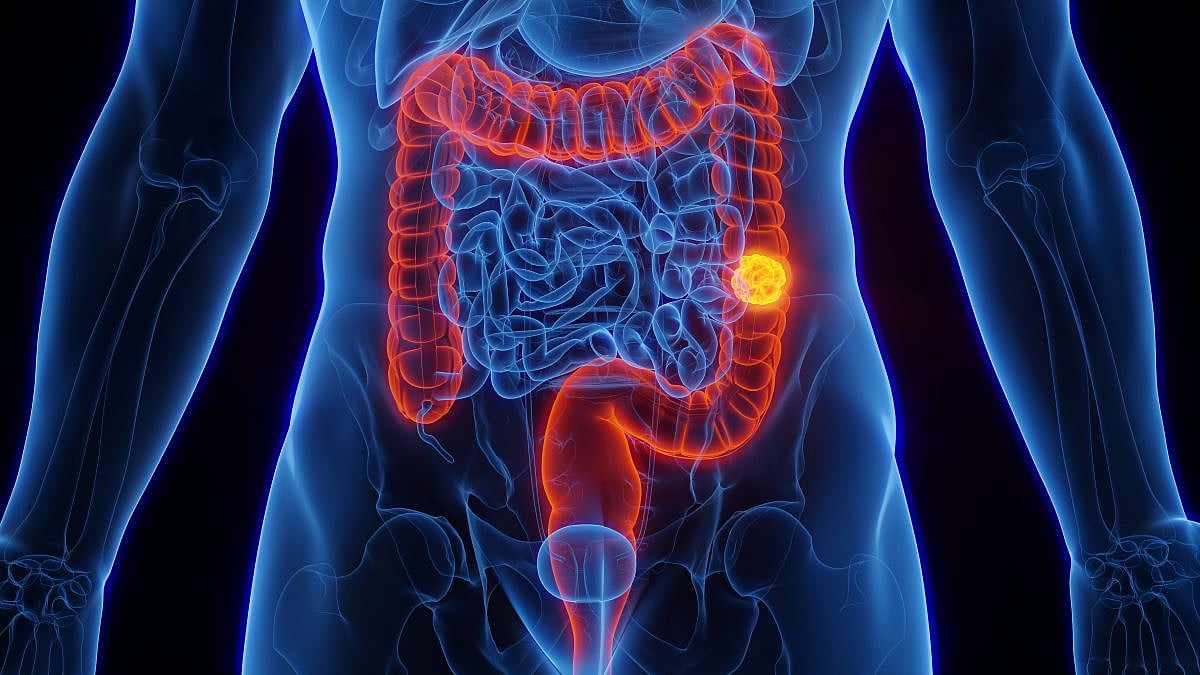
High birth weight, male sex, Hispanic ethnicity, older paternal age linked to increased risk of EOCRC
THURSDAY, June 25, 2026 (HealthDay News) — Certain demographic, birth, and parental characteristics are associated with the risk of early-onset colorectal cancer (EOCRC), according to a study published online June 22 in Cancer.
Sunny Siddique, M.P.H., Ph.D., from the Yale School of Public Health in New Haven, Connecticut, and colleagues examined the relationship between demographic, birth, and parental characteristics and the risk of EOCRC in a study involving 1,221 cases born and diagnosed with EOCRC at the age of 0 to 39 years in California during 1988 through 2021 and 61,050 frequency-matched controls.
The researchers found that compared with women, men had significantly higher risk of EOCRC based on multivariable analysis (odds ratio, 1.34), and Hispanic ethnicity was also associated with higher risk compared with non-Hispanic White (odds ratio, 1.34). Lower risk of EOCRC was seen in association with having a foreign-born mother (odds ratio, 0.85). Every 500-g increase in birth weight was associated with an increase in EOCRC risk among women (odds ratio, 1.10), and the risk of EOCRC was higher in association with having a father aged ≥35 years (odds ratio, 1.56). There were no other significant associations seen for demographic, birth, and parental characteristics with EOCRC risk.
“Evaluating demographic, birth, and parental characteristics is important in understanding what”s causing the rising incidence of early-onset colorectal cancer,” Siddique said in a statement. “Our findings warrant future studies aimed to understand the mechanisms through which factors such as male sex, Hispanic ethnicity, birth weight, maternal birthplace, and paternal age may influence risk of early-onset colorectal cancer.”
One author disclosed ties to Flatiron Health and a second author disclosed ties to Bristol Myers Squibb.
 Surveillance Colonoscopy at Five Years After Adenoma Removal Noninferior to Three Years
  Family History of CRC Increases CRC Risk Similarly in IBD, General Population
  H. Pylori Exposure May Contribute to Global Burden of Colorectal Cancer
  Lower Breast, Cervical Cancer Screening Seen for Adults With Disabilities
  Gap Found Between Awareness of Breast Cancer Risk and Risk-Reducing Behavior
  Pre-Prostate Biopsy MRI Use Increased From 2017 to 2026
  Exercise Intervention Linked to Improved Attention, Memory in Breast Cancer
  Dense Breast Notification Linked to Increase in Use of Supplemental Ultrasound
 .jpg)




