


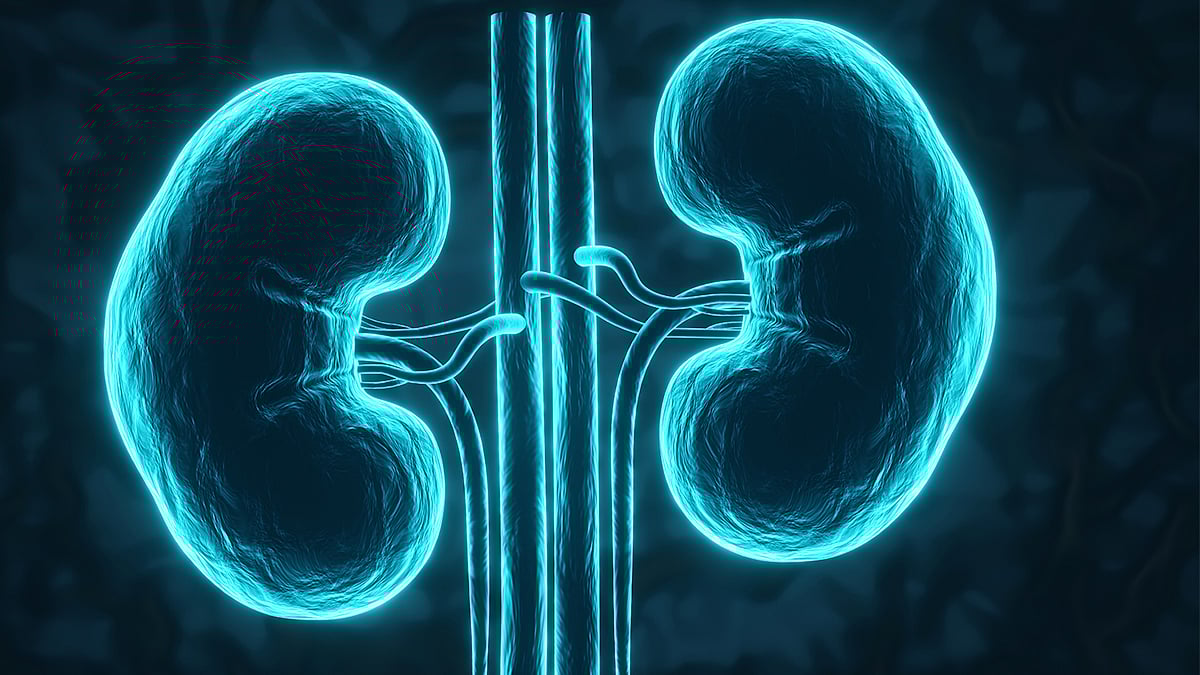
UACR more strongly associated with kidney failure than urinary protein-creatinine ratio
THURSDAY, Nov. 6, 2025 (HealthDay News) — The urinary albumin-creatinine ratio (UACR) is more strongly associated with kidney failure than the urinary protein-creatinine ratio (UPCR), according to research published online Nov. 4 in the Annals of Internal Medicine.
Hiddo J.L. Heerspink, Ph.D., from University Medical Center Groningen in the Netherlands, and colleagues examined and compared performance of UACR and UPCR across chronic kidney disease (CKD)-related clinical outcomes in an individual patient-level meta-analysis. Data were included for 148,994 participants with same-day UACR and UPCR measurements.
There were 9,773 kidney failure events during a median follow-up of 3.8 years. The researchers found that higher UACR and UPCR had a log-linear association with an increased risk for kidney failure, with a stronger association seen for UACR than UPCR (adjusted hazard ratio per standard deviation increment, 2.55 and 2.40, respectively). In subgroups with UACR greater than 30 mg/g, UPCR greater than 500 mg/g, estimated glomerular filtration rate less than 60 mL/min/1.73 m2, diabetes, and glomerular disease, results were consistent to slightly stronger. For cardiovascular outcomes, associations between UACR and UPCR were generally similar, but in subgroups with moderately to severely elevated UACR, they favored UACR.
“Given increasing access to and affordability of UACR and capacity to standardize UACR assays, these data support use of UACR as the preferred measure to stratify patients at risk for CKD-related clinical outcomes,” the authors write.
Abstract/Full Text (subscription or payment may be required)
.jpg) Pregnancy Complications Linked to Subsequent Risk for Cardiometabolic-Renal Conditions
Pregnancy Complications Linked to Subsequent Risk for Cardiometabolic-Renal Conditions  GLP-1 Receptor Agonists, SGLT-2is Slow Renal Function Decline in T2D With Albuminuria
  Early Complications Common in Older Kidney Transplant Recipients
 .jpeg) 1997 to 2022 Saw Increase in Pediatric Hospitalizations With AKI
1997 to 2022 Saw Increase in Pediatric Hospitalizations With AKI  Frailty Linked to Incident Cognitive Decline in Men With CKD
  UACR, UPCR Provide Indistinguishable Prognostic Information in CKD
 .jpg) Recommendations Updated for Management of Anemia in CKD
Recommendations Updated for Management of Anemia in CKD  More Advanced CKM Syndrome Linked to Worse Cardiovascular Health


.jpg)

