


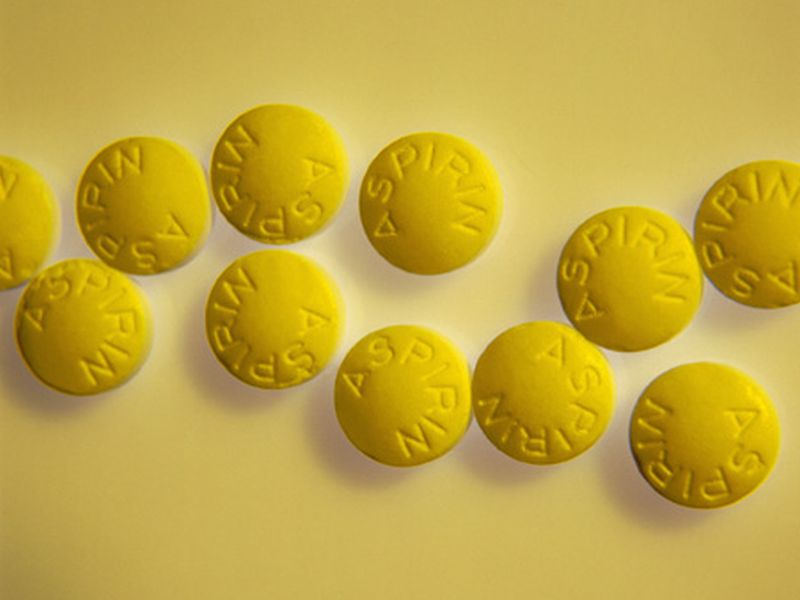
 No impact on composite of death, dementia, persistent physical disability; rise in risk of death
MONDAY, Sept. 17, 2018 (HealthDay News) — Low-dose aspirin appears to have limited effect on healthy life span in older people, according to three studies published online Sept. 16 in the New England Journal of Medicine.
John J. McNeil, M.B., B.S., Ph.D., from Monash University in Melbourne, Australia, and colleagues randomized 19,114 healthy elderly persons to receive aspirin (9,525 participants) or placebo (9,589 participants). The trial was terminated at a median of 4.7 years of follow-up. The researchers found that the rate of the primary end point — a composite of death, dementia, or persistent physical disability — was 21.5 and 21.2 events per 1,000 person-years in the aspirin and placebo groups, respectively (hazard ratio, 1.01; 95 percent confidence interval, 0.92 to 1.11).
In a second study, McNeil and colleagues examined the impact of aspirin on the rate of cardiovascular disease and major hemorrhage. The researchers found that the rate of cardiovascular disease was 10.7 and 11.3 events per 1,000 person-years in the aspirin and placebo groups, respectively (hazard ratio, 0.95; 95 percent confidence interval, 0.83 to 1.08). The rate of major hemorrhage was 8.6 and 6.2 events per 1,000 person-years, respectively (hazard ratio, 1.38; 95 percent confidence interval, 1.18 to 1.62). In a third study, McNeil and colleagues found that the risk of death from any cause was higher in the aspirin group (12.7 versus 11.1 events per 1,000 person-years, respectively; hazard ratio, 1.14; 95 percent confidence interval, 1.01 to 1.29). Cancer was the main contributor to higher mortality in the aspirin group.
“In the context of previous studies, this result was unexpected and should be interpreted with caution,” write the authors of the third study.
Aspirin and placebo used in the studies were supplied by Bayer.
Abstract/Full Text 1
Abstract/Full Text 2
Abstract/Full Text 3
 Aspirin Does Not Reliably Prevent Colorectal Cancer
 IV Tenecteplase Not Recommended for Central Retinal Artery Occlusion
 Aspirin Linked to Lower CRC Recurrence for Molecularly Defined Subgroup
 USPSTF Guidelines of Little Value for Estimating Preeclampsia Risk in Those at Moderate Risk
 Low Levels of Placental Growth Factor in Pregnancy Linked to Subsequent ADHD in Offspring
 Recommendations Issued for Use of Incretin-Based Meds in Pregnancy
 Maternal Vitamin D Status Linked to Preterm Delivery
 IBD Not Linked to Risk for Hypertensive Disorders of Pregnancy Overall





.jpg)