


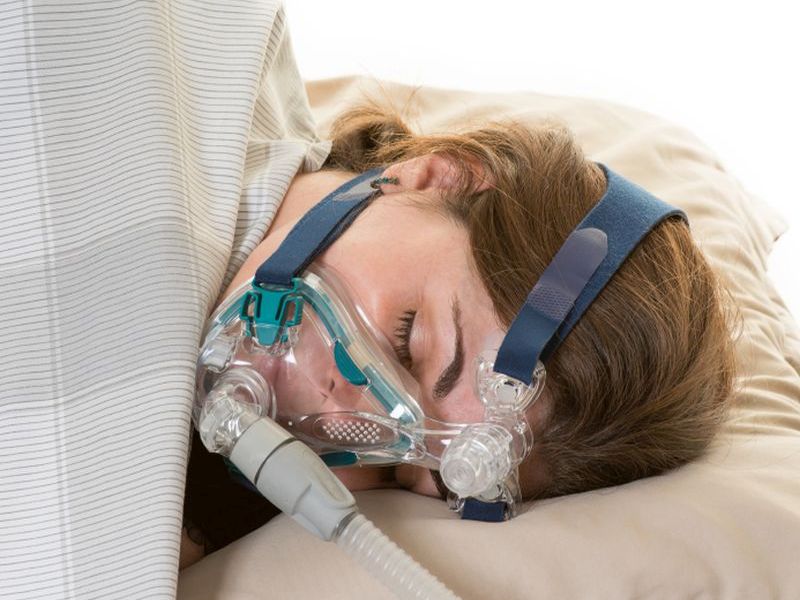
 Findings based on one year of follow-up for patients newly diagnosed with sleep apnea
FRIDAY, May 25, 2018 (HealthDay News) — Successful continuous positive airway pressure (CPAP) use for obstructive sleep apnea may be associated with improved sexual quality of life (QOL), according to a study published online May 24 in JAMA Otolaryngology-Head & Neck Surgery.
Sebastian M. Jara, M.D., from the University of Washington in Seattle, and colleagues evaluated the association between long-term CPAP treatment (more than four hours per night) with sexual QOL for 182 patients (63.2 percent men; mean age, 47.2 years) newly diagnosed with obstructive sleep apnea (September 2007 through June 2010).
At the 12-month follow-up, the researchers found that 72 CPAP users (mean use, 6.4 hours per night) had greater improvement in sexual QOL scores than 110 nonusers (zero hours per night). After adjustment for age, sex, race/ethnicity, marital status, income level, educational level, body mass index, apnea-hypopnea index, and the Functional Comorbidity Index, a moderate treatment association remained. In subgroup analysis, there was a larger treatment association for women than men.
“Successful CPAP use may be associated with improved sexual QOL. Subgroup analysis revealed a large improvement in women but no improvement in men,” the authors write. “Further study is warranted to test other measures of sexual QOL and other treatments.”
 Hospital Outcomes Better When Patients Treated by Female Physicians
 Active Smoking Linked to Progression of Sickle Cell Retinopathy
 Alcohol-Attributable Cancer Mortality Has Increased Significantly in the U.S.
 Impact of Alcohol Intake on Fibrosis Risk Varies by Sex, Liver Disease
 Steatotic Liver Disease Risk Scores Compared for Predicting Cirrhosis
 Cirrhosis Can Recur After Liver Transplant
 Increase Seen in Rates of Xenobiotic-Induced Liver Injury From 2020 to 2024
 Link Between Liver Fibrosis in MASLD, ASCVD Varies by Glycemic Status





