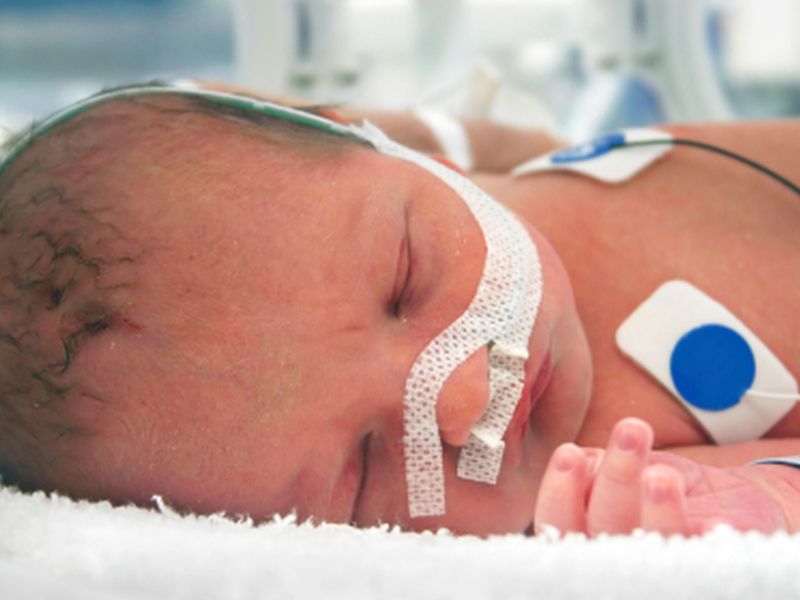
 But risks are mainly attributable to factors other than medically assisted reproductive treatment
MONDAY, Jan. 28, 2019 (HealthDay News) — Children born by medically assisted reproduction have an increased risk for adverse birth outcomes; however, the increased risk appears to be attributable to other factors, according to a study published online Jan. 14 in The Lancet.
Alice Goisis, Ph.D., from the London School of Economics and Political Science, and colleagues used data from Finnish administrative registers and examined birth weight, gestational age, risk for low birth weight, and risk for preterm birth for children conceived by medically assisted reproduction and children conceived naturally.
Four percent of children (2,776 children) in the sample were conceived by medically assisted reproduction between 1995 and 2000; 1,245 children were included in a sibling comparison. The researchers found that outcomes were worse for children conceived by medically assisted reproduction compared with those conceived naturally for all outcomes, even after adjustment for observed child and parent characteristics (e.g., −60 g difference in birth weight [95 percent confidence interval, −86 to −34 g]; 2.15 percentage point increased risk for preterm delivery [95 percent confidence interval, 1.07 to 3.24]). The gap in birth outcomes was attenuated in the sibling comparison (e.g., −31 g difference in birth weight [95 percent confidence interval, −85 to 22 g] and 1.56 percentage point increased risk for preterm delivery [95 percent confidence interval, −1.26 to 4.38]).
“These findings support the argument that medically assisted reproduction treatments per se have little or no effect on the risk of adverse birth outcomes,” the authors write.
Abstract/Full Text (subscription or payment may be required)
Editorial (subscription or payment may be required)
 Maternal Vitamin D Status Linked to Preterm Delivery
  Dexamethasone Eye Drops Can Reduce Progression to ROP Requiring Treatment
  Effect of Preparation Techniques Before Embryo Transfer Appears to Be Limited
  Glyphosate Exposure During Pregnancy Linked to Preterm Birth
  Mom"s Poor Sleep in Late Pregnancy Linked to Offspring"s Obesity Risk in Early Childhood
  Altered Markers of Ovarian Development Seen With Fetal Acetaminophen Exposure
  Autism Spectrum Disorder Diagnoses Increased for Females Since 2020
  Virtual Reality-Based Digital Defocus Vision Training May Aid Myopia in Children
 .jpg)