


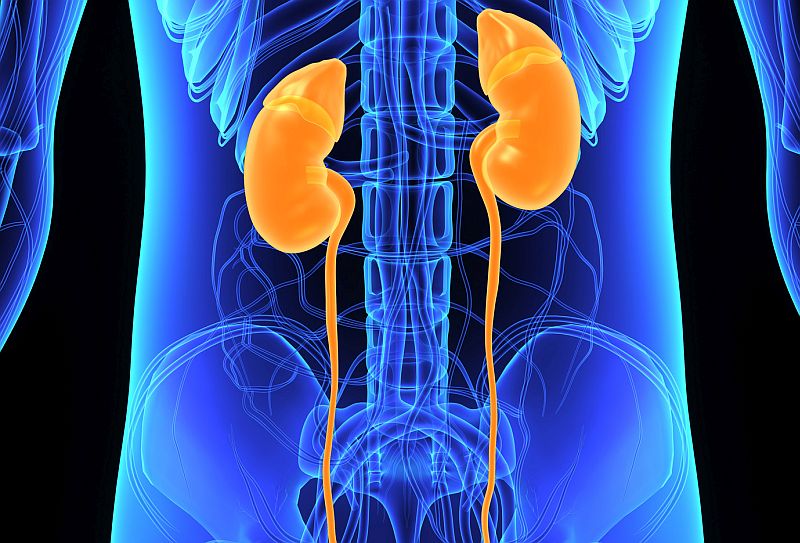
 No difference in patient, graft survival; increased costs seen for A2 to B deceased donor kidney transplant
WEDNESDAY, Feb. 6, 2019 (HealthDay News) — Outcomes are similar for blood type A2 to blood type B and B to B deceased donor kidney transplantation (DDKTx), according to a study published online Jan. 30 in the Journal of the American College of Surgeons.
David Shaffer, M.D., from the Vanderbilt University Medical Center in Nashville, Tennessee, and colleagues conducted a retrospective cohort analysis of 29 consecutive A2 to B and 50 B to B DDKTx. Patients were followed for three years after transplant.
The researchers found that African-Americans comprised 72 and 60 percent of the A2 to B and B to B groups. No difference was seen in mean wait time (58.8 versus 70.8 months). In A2 to B DDKTx, anti-A immunoglobulin G titers were increased at discharge and four weeks. Patient or graft survival, serum creatinine, and estimated glomerular filtration rate (eGFR) did not differ significantly; during the follow-up period, the trajectories of serum creatinine and eGFR differed between the groups. Significantly higher mean transplant total hospital costs ($114,638 versus $91,697) and hospital costs net organ acquisition costs ($42,356 versus $20,983) were significantly higher for A2 to B transplants.
“This was the first study to report on the costs associated with A2 to B transplantation,” Shaffer said in a statement. “One of our next steps is to look at costs over a broader period of time. We also plan to study ways of bringing down costs.”
Abstract/Full Text (subscription or payment may be required)
 GLP-1 Receptor Agonists, SGLT-2is Slow Renal Function Decline in T2D With Albuminuria
 .jpeg) 1997 to 2022 Saw Increase in Pediatric Hospitalizations With AKI
1997 to 2022 Saw Increase in Pediatric Hospitalizations With AKI  Early Complications Common in Older Kidney Transplant Recipients
  Frailty Linked to Incident Cognitive Decline in Men With CKD
  UACR, UPCR Provide Indistinguishable Prognostic Information in CKD
 .jpg) Recommendations Updated for Management of Anemia in CKD
Recommendations Updated for Management of Anemia in CKD  More Advanced CKM Syndrome Linked to Worse Cardiovascular Health
  2011 to 2021 Saw Heart Failure-Related Hospitalization Rise in CKD



.jpg)
