Increased odds of current asthma and wheeze seen at 4 to 6 years of age, but associations were null for outcomes at 8 to 9 years of age
THURSDAY, April 3, 2025 (HealthDay News) — Early-life ozone (O3) exposure is associated with asthma and wheeze outcomes at 4 to 6 years of age, according to a study published online April 2 in JAMA Network Open.
Logan C. Dearborn, M.P.H., from the University of Washington in Seattle, and colleagues examined the associations between ambient O3 and subsequent asthma and wheeze outcomes — independently and in mixture with fine particulate matter and nitrogen dioxide — in a pooled multisite analysis across six U.S. cities.
The analytic sample included 1,188 participants. The mean O3 concentration was 26.1 parts per billion (ppb) in the first two years of life. The researchers found that 148 children had current asthma and 190 had current wheeze (12.3 and 15.8 percent, respectively) at age 4 to 6 years. Per 2 ppb higher O3 concentration, the odds ratios were 1.31 and 1.30 for current asthma and current wheeze, respectively, at age 4 to 6 years; for outcomes at 8 to 9 years and for sensitivity covariate adjustment, the associations were null. Higher exposure to O3 in mixture was associated with current asthma and wheeze in early childhood in Bayesian kernel machine regression.
“This analysis underscores the importance of better understanding the role of early-life exposure to ambient O3 in addressing risk factors for pediatric asthma in the U.S.,” the authors write.
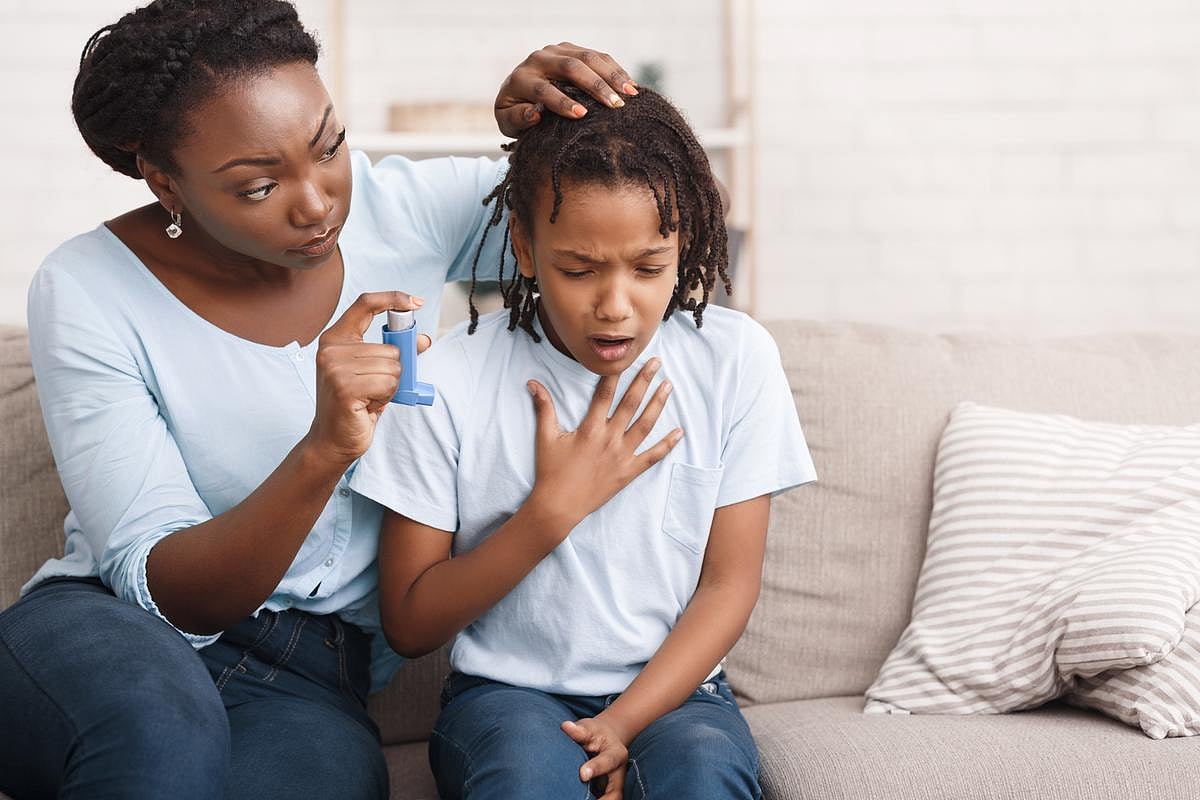 Fractional Exhaled Nitric Oxide Elevated in Pediatric Chest Tightness Variant Asthma
  Higher Short-Term Exposure to Pollen Linked to Lower FEV1 in COPD
  Higher Diet Quality Linked to Improved Lung Function in Asthma, COPD
  Study Reveals Silicosis Rates Among Workers Fabricating Stone Countertops
  Adenotonsillectomy Tied to Increase in Respiratory Tract Infections in Children
  Lung Disease More Common With Ulcerative Colitis Than Crohn Disease
  Cognitive, Manual Impairment Tied to Unacceptable Inhaler Technique