Estimates become more inaccurate with increasing body fat
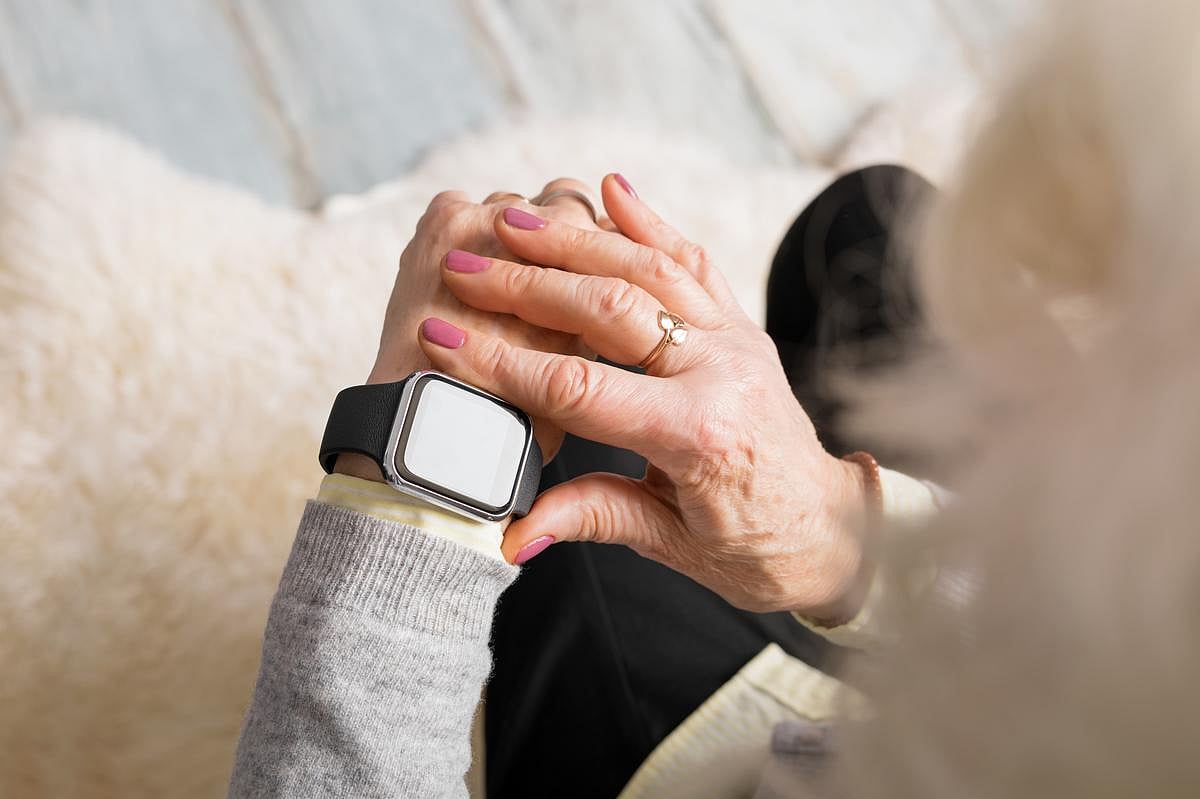
TUESDAY, Sept. 8, 2026 (HealthDay News) — Smartwatches significantly overestimate how many calories people burn during exercise, according to a study published online July 29 in PLOS One.
Jason Kostrna, from Florida International University in Miami, and colleagues evaluated the accuracy of smartwatch-derived physical activity energy expenditure estimates compared to indirect calorimetry, and examined whether error varied by device brand, body fat percentage, and skin tone. The analysis included participant-device pairings: 52 participants wearing Apple Watch Series 8; 51 wearing Garmin Forerunner 955; 50 wearing Samsung Galaxy Watch 5; and 44 wearing Fitbit Sense 2.
The researchers found significant mean bias for three of four devices, with the nonsignificant Fitbit bias depending on device-specific outlier removal. Errors in smartwatch calorie estimates ranged roughly from 15 to 25 percent, with averages for the worst-performing watches climbing higher (Apple mean: 21.60 kcal [95 percent confidence interval (CI), 11.59 to 31.60]; Garmin: 68.61 kcal [95 percent CI, 53.28 to 83.94]; Samsung: 56.76 kcal [95 percent CI, 45.11 to 68.41]; Fitbit: 3.14 kcal [95 percent CI, −8.96 to 15.24]). There were main effects for device, body fat percentage main, and a device-by-body fat percentage interaction, according to mixed-effects models. Across all brands, physical activity energy expenditure error increased with adiposity.
“You can”t treat the calories burned number it gives you as an accurate number,” Kostrna said in a statement. “You could be hundreds of calories off each week and easily end up in a calorie surplus when you think you”re in a calorie deficit.”
 Evidence Insufficient to Support Routine Lumbar Support Use for Chronic Low Back Pain
  Maintaining Physical Activity Tied to Better Quality of Life With Multiple Sclerosis
  Strength Training May Cut GDM Risk in Pregnant Women With Overweight, Obesity
  Central Adiposity Reclassifies Cardiovascular Risk Across BMI Spectrum
  NOACs Linked to Slower Cognitive Decline in Patients With A-Fib, Alzheimer Disease
  Very Low-Carb Diet Shows Greater Cardiometabolic Benefits Than Other Diets
  2011 to 2021 Saw Heart Failure-Related Hospitalization Rise in CKD
  Machine Learning Model IDs Heart Failure With Reduced Ejection Fraction Using Routine Lab Indicators