


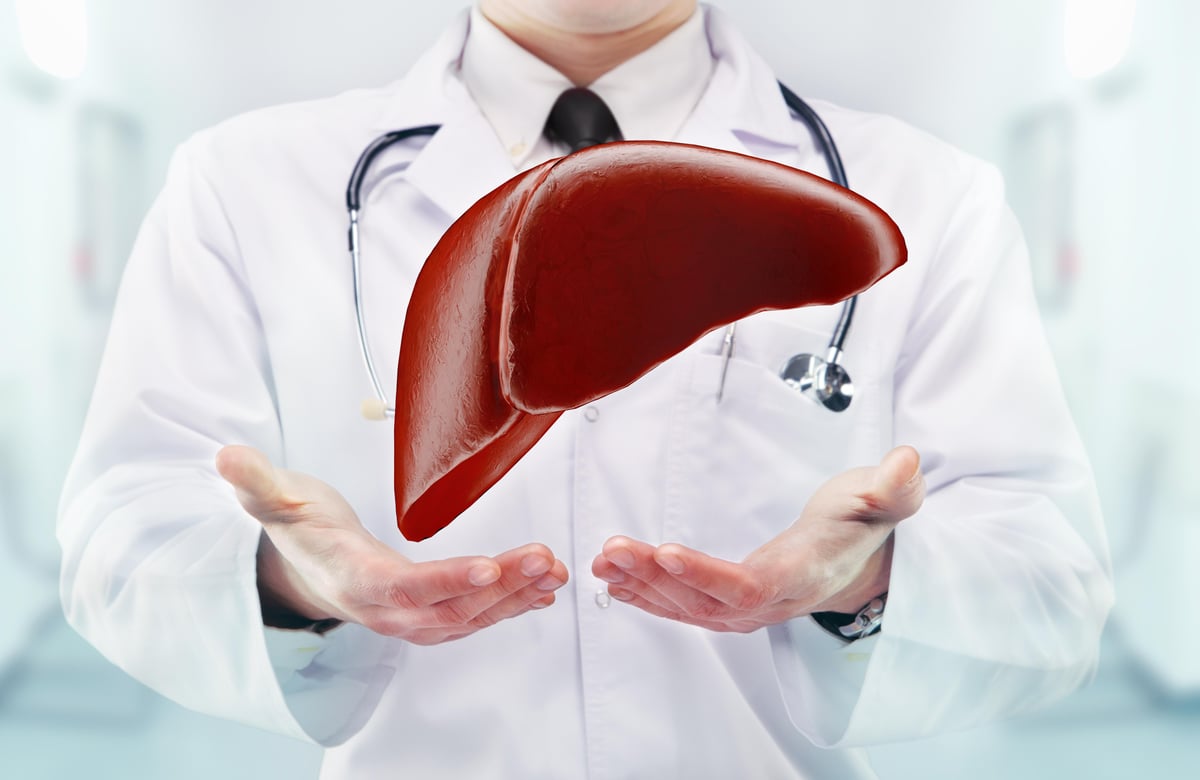
About one in five patients with preexisting chronic liver disease develop progressive cholestasis after severe COVID-19
TUESDAY, June 21, 2022 (HealthDay News) — About one in five patients with chronic liver disease (CLD) develop progressive cholestasis after severe COVID-19, according to a study published online May 21 in Hepatology.
Lukas Hartl, M.D., from University of Vienna, and colleagues examined the incidence of hepatic complications following severe COVID-19. The analysis included 496 hospitalized patients with COVID-19 (65 with preexisting liver disease).
The researchers found that COVID-19-related liver injury was more common among patients with CLD (24.6 versus 10.6 percent). Following severe COVID-19, CLD patients showed progressive cholestasis with persistently increasing levels of alkaline phosphatase and gamma-glutamyl transferase. Nearly one-fourth of patients with CLD (23.1 percent) developed cholestatic liver failure (cholestasis plus bilirubin ≥6 mg/dL) during COVID-19, and 15.4 percent of patients with CLD developed secondary sclerosing cholangitis (SSC), which was significantly more frequent with CLD and COVID-19 versus CLD patients with non-COVID-19 pneumonia. Nonalcoholic fatty liver disease/nonalcoholic steatohepatitis patients with metabolic risk factors accounted for most COVID-19-associated SSC. More than one-fourth of advanced CLD patients (26.3 percent) experienced hepatic decompensation following COVID-19.
“It is useful, in any case, to closely monitor liver function values in intensive care unit patients during or following COVID-19,” a coauthor said in a statement.
Several authors disclosed financial ties to the pharmaceutical industry.
 Steatotic Liver Disease Risk Scores Compared for Predicting Cirrhosis
  Cirrhosis Can Recur After Liver Transplant
  Increase Seen in Rates of Xenobiotic-Induced Liver Injury From 2020 to 2024
  Impact of Alcohol Intake on Fibrosis Risk Varies by Sex, Liver Disease
  Link Between Liver Fibrosis in MASLD, ASCVD Varies by Glycemic Status
  Higher Coffee Consumption Linked to Favorable Indicators of Liver Health
  Stepped Alcohol Treatment Via Telehealth Reduces Alcohol Use
  New Model Performs Well for Detecting Alcohol-Associated Liver Disease


.jpg)

