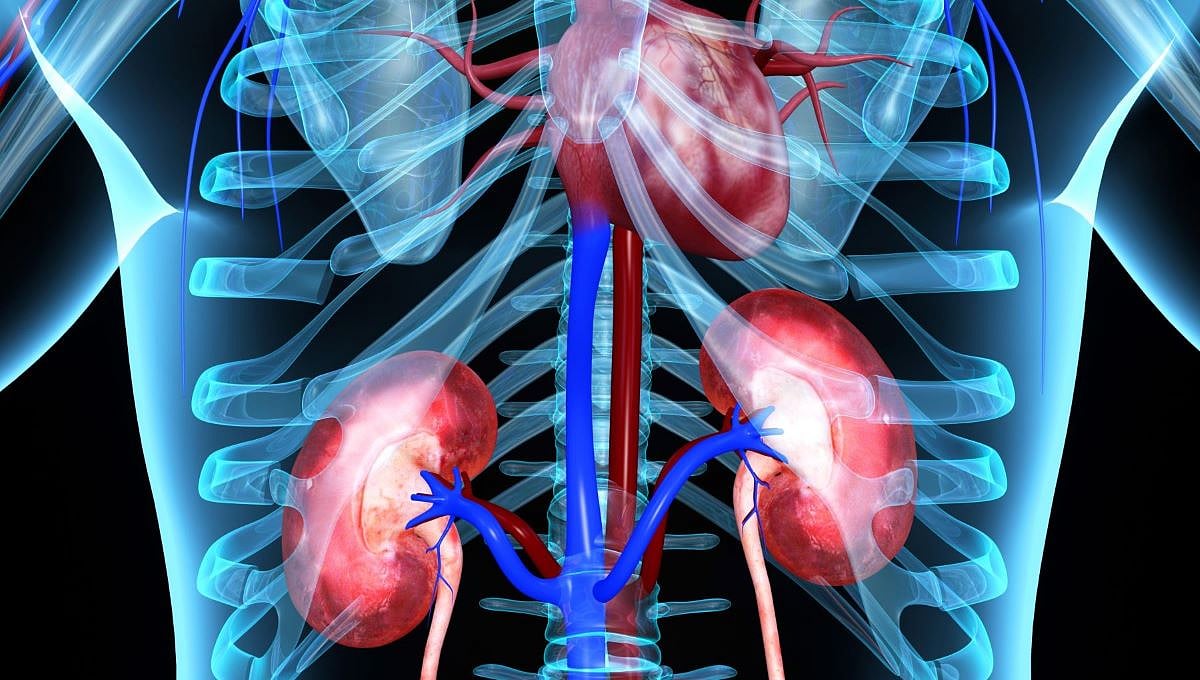
In a recent study, mean sensitivity was 85.5 percent and specificity 87 percent for detection of clear-cell renal cell carcinoma
MONDAY, Oct. 21, 2024 (HealthDay News) — ⁸⁹Zr-labeled monoclonal antibody ([⁸⁹Zr]Zr-girentuximab) for positron emission tomography-computed tomography (PET-CT) is accurate for detecting patients with clear-cell renal cell carcinoma, according to a study published online in the October issue of The Lancet Oncology.
Brian Shuch, M.D., from the University of California Los Angeles, and colleagues conducted a multicenter, phase 3 trial at 36 research hospitals and practices across nine countries to examine [⁸⁹Zr]Zr-girentuximab PET-CT imaging for detection and characterization of clear-cell renal cell carcinoma. Three hundred patients aged 18 years or older with an indeterminate renal mass 7 cm or smaller (cT1) suspicious for clear-cell renal cell carcinoma and scheduled for nephrectomy received a single dose of [⁸⁹Zr]Zr-girentuximab intravenously followed by abdominal PET-CT imaging. Surgery was performed up to 90 days after [⁸⁹Zr]Zr-girentuximab administration.
The primary analysis included 284 of the evaluable patients. The mean sensitivity and specificity of [⁸⁹Zr]Zr-girentuximab PET-CT imaging for detection of clear-cell renal cell carcinoma was 85.5 and 87.0 percent, respectively. There were no safety signals. Most of the adverse events were not or were unlikely to be related to [⁸⁹Zr]Zr-girentuximab; 74 percent of the 261 events occurred during or after surgery. Fifty-two serious adverse events were reported in 25 patients, of which 51 occurred after surgery. No treatment-related deaths occurred.
“Imaging using [⁸⁹Zr]Zr-girentuximab has the potential to change clinical practice in renal cell carcinoma, including staging and monitoring patients at high risk and detection of distant metastasis,” the authors write.
Several authors disclosed ties to biopharmaceutical companies, including Telix Pharmaceuticals, which funded the study.
 Machine Learning Model IDs Heart Failure With Reduced Ejection Fraction Using Routine Lab Indicators
  Addition of CAC to PREVENT-ASCVD Equations May Improve Predictive Utility in Certain Patients
  Patient Education Increases Skin Cancer Screening in Stem Cell Transplant Survivors
  NEWS2 Scores Can ID Patients With Suspected Sepsis Needing Timely Treatment
 .jpeg) Flu Treatment With Oseltamivir Linked to Reduced Risk for Pediatric ICU Admissions, Length of Stay
Flu Treatment With Oseltamivir Linked to Reduced Risk for Pediatric ICU Admissions, Length of Stay  Therapeutic Hypothermia Duration Explored in Comatose OHCA Survivors
  CHEST Issues Guidelines for Management of Adult Bronchiectasis
  Autonomous Oxygen Titration Increases Proportion of Time in Normoxemia