90 to 119 minutes/week of strength training tied to 13 percent lower risk for death from any cause
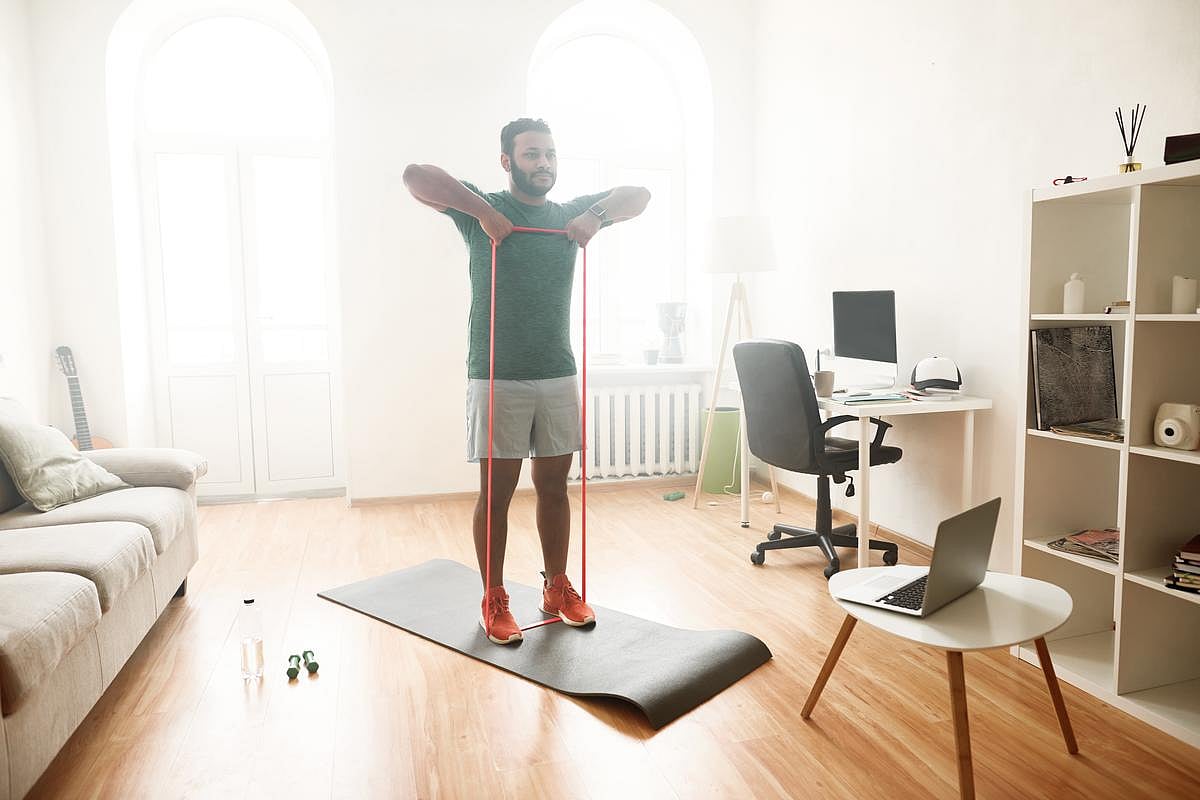
THURSDAY, June 4, 2026 (HealthDay News) — Ninety to 120 weekly minutes of strength training may lower the risk for death, with amplified effects when combined with aerobic activity, according to a study published online June 2 in the British Journal of Sports Medicine.
Yiwen Zhang, from the Harvard T.H. Chan School of Public Health in Boston, and colleagues examined whether resistance training is associated with lower all-cause and cause-specific mortality; they also examined the joint effects with aerobic activity. The analysis included 31,540 men participating in the Health Professionals Follow-Up Study (1992 to 2022) and 115,834 women participating in the Nurses” Health Study (2002 to 2021) or the Nurses” Health Study II (2003 to 2021).
The researchers found that during 30 years of follow-up, 90 to 119 minutes/week of resistance training was associated with a lower risk for all-cause mortality (hazard ratio [HR], 0.87), cardiovascular mortality (HR, 0.81), and neurological disease mortality (HR, 0.73), when adjusting for aerobic activity. There was no additional benefit seen for resistance training greater than 120 minutes/week. Compared with those with inadequate aerobic activity (<7.5 metabolic equivalent of task [MET] hours/week) and no resistance training, lower cancer mortality risk was seen only at lower levels of resistance training (one to 29 minutes/week: HR, 0.91; 30 to 59 minutes/week: HR, 0.88). Mortality risk was lowest among participants with both high aerobic and resistance training (e.g., 30 to <45 MET-hours/week of aerobic exercise and 60 to 119 minutes/week of resistance training: HR, 0.55) and among those attaining ≥45 MET-hours/week of aerobic activity, regardless of resistance-training level (HRs from 0.53 to 0.58).
“The observed pattern that adding resistance training further reduced mortality risk across all levels of aerobic activity up to ≥45 MET-hours/week supports current recommendations encouraging both types of activity to maximize mortality benefits,” the authors write.
 Stair Climbing Associated With Reduction in Cardiovascular, All-Cause Mortality
  Physical Activity Reduces Stroke, Mortality, Regardless of A-Fib
  Review Reveals Limited Effects of Exercise on Hip Osteoarthritis
  Swimming Program May Provide Short-Term Relief From Chronic Low Back Pain
  Exercise Has Negligible, Short-Lasting Benefit on Pain, Function in OA
  Adding Physical Therapy to Home Exercise Does Not Reduce Knee Pain
  Aerobic Exercise Likely Most Beneficial Modality in Knee Osteoarthritis
  Very Low-Calorie Diet Plus Exercise Does Not Reduce Hip Pain in OA