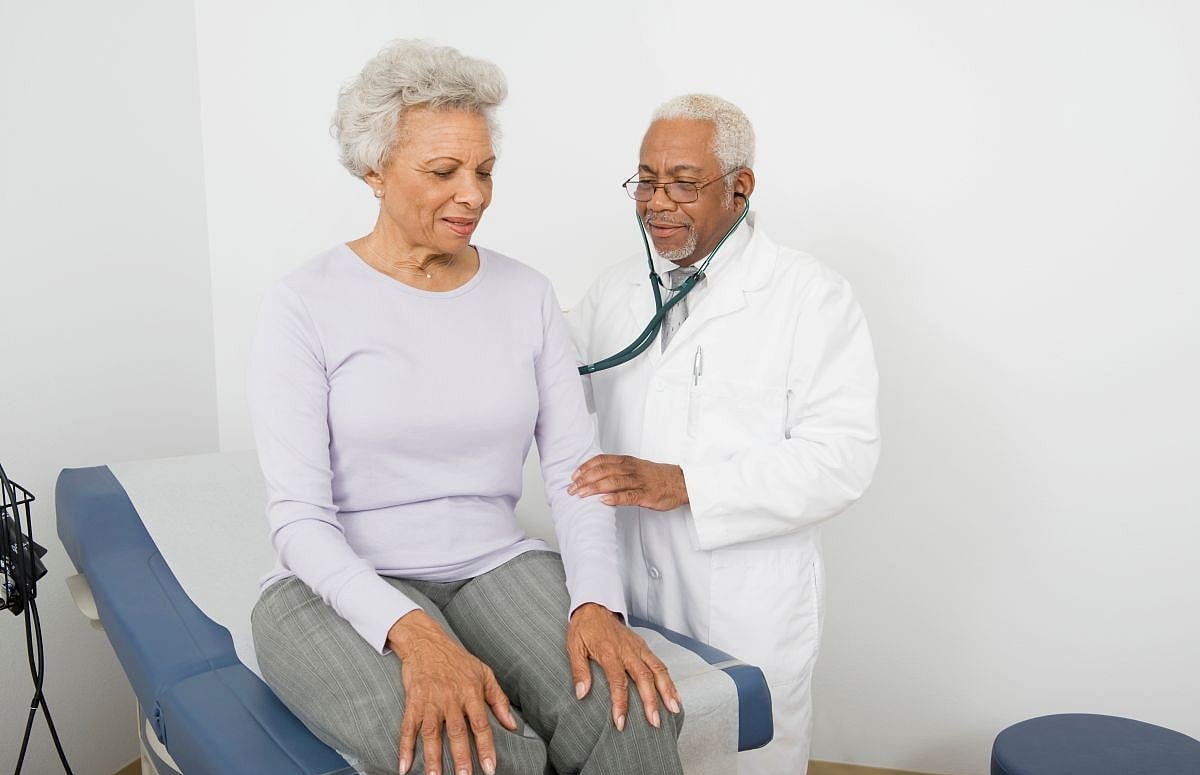
 Two experts spoke with HD Live! about telemedicine’s growth, best practices, outlook for the future
FRIDAY, July 31, 2020 (HealthDay News) — The emergence of telemedicine has accelerated during the coronavirus pandemic. HD Live! sat down with Rujuta Saksena, M.D., an oncologist at Overlook Medical Center in Summit, New Jersey, and Ateev Mehrotra, M.D., associate professor of health care policy at Harvard Medical School in Boston, to discuss the future of telemedicine and its impact on health care.
“Telemedicine has actually been around for many decades, but we hadn’t been open to adopting it until this year,” Saksena said. “What the COVID-19 pandemic did is essentially shoehorn us into this approach, both patients and providers alike.”
Estimates have shown that by the end of 2020, there will have been 1 billion telemedicine appointments across the nation, according to analysts at Forrester Research. “In the course of the pandemic, the growth was just staggering,” Mehrotra said. “Changes that we would’ve expected over a decade happened within a week or two, and it’s just really remarkable. [Telemedicine] became something that went from being the future to being the reality of how a lot of Americans were getting care.”
Practitioners have had to adapt to this new rhythm to health care and learn new skill sets, especially with respect to performing a comprehensive physical examination, said Saksena. When using telemedicine, she noted it is crucial for practitioners to pay extra attention to a patient’s facial expressions and nuances and to frame questions differently than they might be worded normally to elicit certain responses.
“Despite the abruptness of embracing this, there has been, in my experience at least, a lot of patient satisfaction, which is quite surprising, but I think that everyone has come to accept this way of delivering health care,” said Saksena.
She and her colleagues underwent training for delivering telemedicine while complying with HIPAA. When choosing a platform, Saksena said the key is “ease of use, it has to be reliable, and it also has to be easy to use from the patient perspective because a lot of our patients are elderly and not necessarily able to navigate technology unless the instructions are relatively easy to follow.”
Consent is also an important part of telemedicine. “One of the things that we do when we log on to a televisit is obtain consent or permission from the patient,” she said. “We let them know this is a billable medical encounter and ask for their permission to proceed.” All of these factors play into which platform physicians choose to use for conducting telemedicine, but Saksena noted the platform may also be mandated by a physician’s organization.
As for best practices, Saksena recommends conducting visits in a private, quiet area such as a home office or room where noise and interruptions can be minimized, being as punctual as possible, being centered within the camera view, and maintaining a sense of normalcy for the patient by wearing a white coat or scrubs.
 ~16 Percent of COVID Cases Develop Postacute Sequelae of SARS-CoV-2
  Parts of the World Seeing New COVID-19 Variant
  HHS, NIH Unveil Vaccine Initiative to Protect Against Future Pandemics
  Hospital-Onset SARS-CoV-2 Infection During Omicron Linked to Morbidity
  Staffing, Scheduling, and Wage Changes Could Reattract Nurses Back to Hospitals
  Skilled Nursing Facility Capacity Declined Between 2019 and 2024
  Physical Design of Critical Care Units Influences Nursing Culture
  Low Capability Pediatric Hospitals More Than Doubled From 2003 to 2022