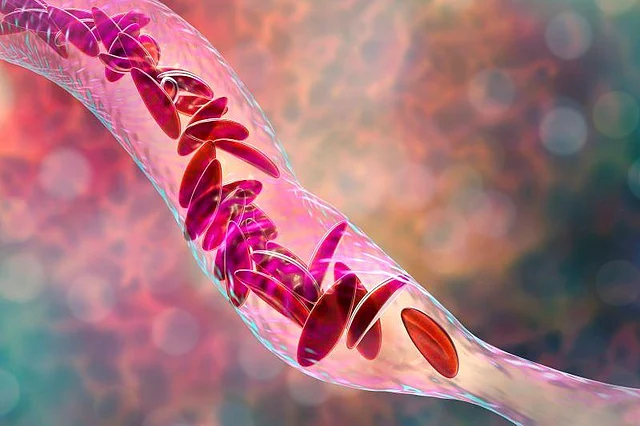
No patients without evidence of vasculopathy at transplant developed stenoses or aneurysms after hematopoietic stem cell transplantation
THURSDAY, Feb. 9, 2023 (HealthDay News) — For adults with sickle cell disease (SCD), hematopoietic stem cell transplantation (HSCT) seems to improve or prevent development of vasculopathies, according to a study presented at the American Stroke Association International Stroke Conference, held from Feb. 8 to 10 in Dallas.
Nathan Lightfoot, D.O., from the U.S. National Institute of Neurological Disorders and Stroke in Bethesda, Maryland, and colleagues examined the impact of HSCT on the development and progression of cerebral vasculopathies in adults with SCD. Eighty-seven patients with SCD who underwent HSCT from 2004 to 2019 and received pretransplant and posttransplant magnetic resonance imaging/magnetic resonance angiography (MRA) studies were included.
At transplant, 28 percent of patients had evidence of vasculopathy: 17 and 13 percent with stenotic vasculopathy and aneurysms, respectively. The researchers found that after HSCT, none of the patients without vasculopathy developed stenoses or aneurysms. In 62 percent of the patients with vasculopathy, MRA stenoses scores improved after HSCT, with a median change of 1.0. No change was seen in any of the intracranial aneurysms identified at transplant.
“We were surprised that bone marrow transplant reversed some of the changes in brain vessels,” a coauthor said in a statement. “We thought that bone marrow transplantation would stop the changes from getting worse; however, we did not think it would reverse the changes.”
 Patient Education Increases Skin Cancer Screening in Stem Cell Transplant Survivors
  Indefinite-Duration Maintenance Therapy No Better Than Fixed-Duration Therapy in Multiple Myeloma
  Definition of Functional High-Risk Multiple Myeloma Updated in Era of Combo Therapy
  A-Fib Occurs Frequently in Patients With Multiple Myeloma Undergoing Stem Cell Transplant
  Central Adiposity Reclassifies Cardiovascular Risk Across BMI Spectrum
  High-Dose Omega-3 Linked to A-Fib Risk in Patients With High CVD Risk
  Physical Activity Reduces Stroke, Mortality, Regardless of A-Fib
  AHA: Consuming Up to 400 mg/Day of Caffeine Safe for Most Adults