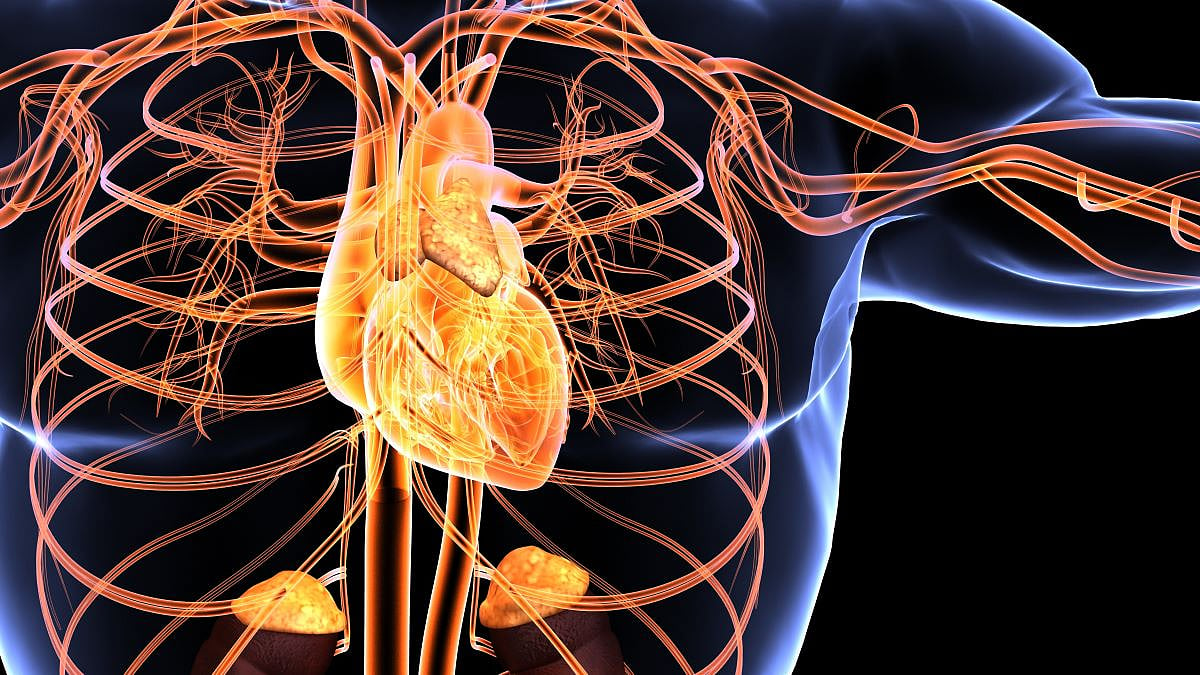
Cold spells and lower ambient temperature exposures linked to increased heart failure hospitalization risk during cold season
WEDNESDAY, Sept. 9, 2026 (HealthDay News) — Short-term exposures to cold spells, lower temperature, and higher temperatures are associated with an increased risk for heart failure hospitalization, according to a study published in the Sept. 1 issue of the Journal of the American College of Cardiology to coincide with the annual meeting of the European Society of Cardiology, held from Aug. 28 to 31 in Munich.
Wenli Ni, Ph.D., M.B.B.S., from the Harvard T.H. Chan School of Public Health in Boston, and colleagues examined the associations of short-term exposure to cold spells, heat waves, and nonoptimal ambient temperature with heart failure hospitalization in Sweden in a nationwide study involving 482,000 heart failure hospitalizations.
The researchers found that cold spells and lower ambient temperature exposures were associated with elevated heart failure hospitalization risk at lag 2 to 6 days during the cold season (significant at lag 3 to 5 days). During lag 2 to 6 days, cumulative associations exhibited odds ratios of 1.085 and 1.008 for cold spells and per 10 percentile-point decrease in temperature, respectively. Higher temperature exposure during the warm season was associated with higher odds at lag 1 to 3 days, with attenuation at longer lags; a cumulative association was seen during lag 0 to 3 days (odds ratio, 1.009 per 10 percentile point increase in temperature). Nonsignificant positive associations were seen for heat waves with heart failure hospitalizations that were more likely to capture acute exacerbations; using the broader definition of heart failure that included chronic conditions, no associations were observed.
“The scientific mission can no longer rest on accumulating further epidemiological associations alone; it is time to translate these robust data into an actionable early-warning capability,” accompanying editorial author Tiantian Li, Ph.D., from the National Institute of Environmental Health in Beijing, said in a statement.
Abstract/Full Text (subscription or payment may be required)
 2011 to 2021 Saw Heart Failure-Related Hospitalization Rise in CKD
  Machine Learning Model IDs Heart Failure With Reduced Ejection Fraction Using Routine Lab Indicators
  Central Adiposity Reclassifies Cardiovascular Risk Across BMI Spectrum
 .jpg) Warning Symptoms, Clinical History Can Predict Sudden Cardiac Arrest
Warning Symptoms, Clinical History Can Predict Sudden Cardiac Arrest  About 1 in 20 Hospitalized U.S. Adults With Firearm Injuries Develop Bacterial Infections
  Addition of CAC to PREVENT-ASCVD Equations May Improve Predictive Utility in Certain Patients
  Emergency Diagnosis Linked to Worse Outcomes for Range of Conditions