


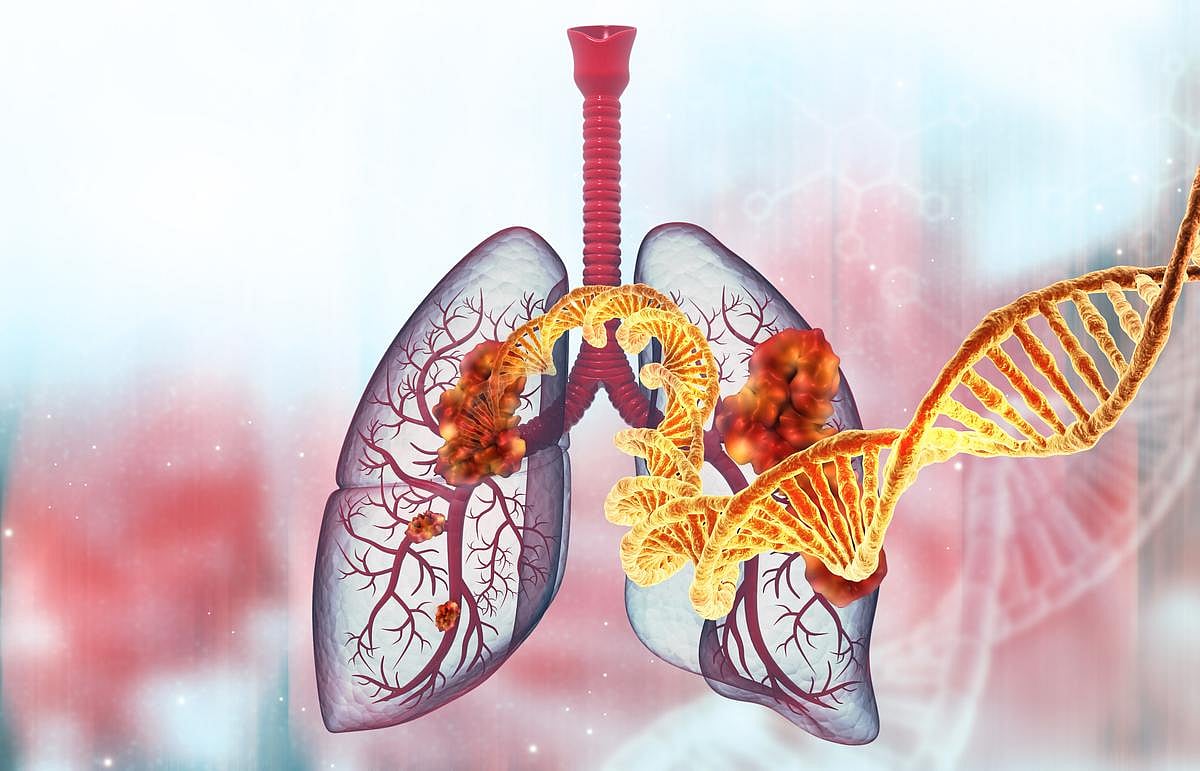
Risk exceeds that conferred by smoking and is higher in never smokers, with odds ratio of 61.70
TUESDAY, Sept. 22, 2026 (HealthDay News) — A mutation in the epidermal growth factor receptor (EGFR) gene is associated with a significantly increased risk for lung cancer, with the risk higher in never smokers, according to a study published in the Sept. 17 issue of Science.
Jaclyn LoPiccolo, M.D., Ph.D., from the Dana-Farber Cancer Institute in Boston, and colleagues examined lung cancer risk in germline EGFR T790M mutation carriers. The association was examined in 3,372,531 participants (9,799 lung cancer cases and 3,362,732 controls without history of lung cancer) of European ancestry for whom EGFR T790M genotype and phenotype data on lung cancer status were available.
The researchers found that the EGFR T790M germline variant was significantly associated with lung cancer risk (odds ratio, 25.18), while no increased risk was seen for 17 non-lung cancer types or noncancerous pulmonary conditions. There was no interaction with polygenic risk. This risk exceeded that conferred by smoking (smoking alone: odds ratio, 3.79) and was higher in never smokers (odds ratio of 61.70 compared with odds ratio of 10.59 for ever smokers). In an analysis of the ancestral origins of 641 EGFR T790M carriers, they were found to be predominantly of European descent, with 80.56 percent having British and Irish as their primary ancestry. A recent founder effect in the U.S. Southern Appalachian region about 200 to 225 years ago was revealed by fine-scale geographic and ancestry analyses.
“One of the remarkable findings here is just how strong an effect a single mutation can have,” co-senior author Alexander Gusev, Ph.D., also from the Dana-Farber Cancer Institute, said in a statement. “To my knowledge it”s one of the strongest, if not the strongest, cancer risk-increasing mutations that has ever been found.”
One author disclosed ties to the pharmaceutical industry.
Abstract/Full Text (subscription or payment may be required)
 Genetics, Diabetes Tied to MASLD-Associated Cirrhosis Before Age 50
  Family History of CRC Increases CRC Risk Similarly in IBD, General Population
  Relapse Rare After Appendiceal Adenocarcinoma Resection
  Distinct Skin Microbiome Features Emerge Before Atopic Disease Onset in Infants
  H. Pylori Exposure May Contribute to Global Burden of Colorectal Cancer
  Freshwater Swimming Tied to Stomach Bugs, Skin Conditions
  Considerable Global Disparities Found in Access to Dermatological Care
  Extreme Heat Linked to 33 Clinically Reportable Diagnoses




.jpg)